
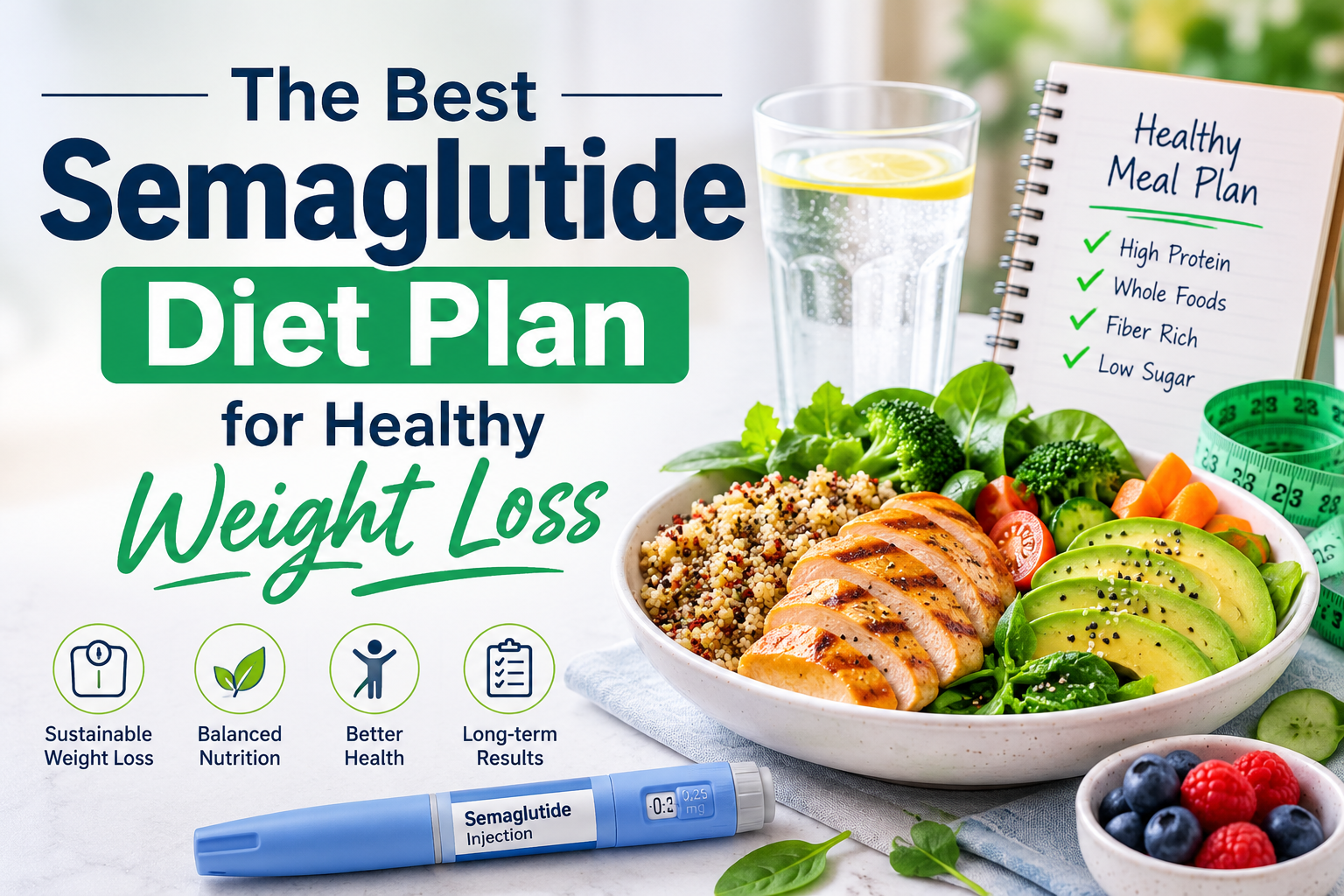
Semaglutide has changed the way many people approach weight loss. As a GLP-1 medication (the active ingredient in Ozempic and Wegovy), it works by slowing digestion, lowering appetite, and helping your body manage blood sugar more effectively. The result? You feel fuller, eat less, and start to see real progress on the scale.
But here’s something many people overlook: the medication is only half the equation. What you put on your plate matters just as much. A thoughtful semaglutide diet plan can reduce uncomfortable side effects like nausea, protect your muscle mass, keep your energy steady, and support weight loss that actually lasts.
In this guide, you’ll learn which foods to prioritize, which ones to limit, and how to build balanced meals while taking semaglutide. We’ll also share a sample one-day plan, practical tips to ease side effects, and signs that it’s time to check in with your provider.
Why Your Diet Matters While Taking Semaglutide
Semaglutide slows down how quickly food leaves your stomach. This is partly why your appetite drops—you feel full faster and stay full longer. While that’s great for cutting calories, it also means every bite needs to count.
When you’re eating less overall, the quality of your food becomes critical. Filling up on empty calories leaves little room for the protein, vitamins, and minerals your body needs. Poor nutrition during weight loss can lead to muscle loss, fatigue, hair thinning, and nutrient deficiencies.
That’s why the goal isn’t simply to eat less. It’s to eat smarter. Focusing on nutrient-dense meals helps you preserve lean muscle, maintain steady energy, and feel your best throughout your weight loss journey. With that foundation in mind, let’s build an effective plan.
The Best Semaglutide Diet Plan for Healthy Weight Loss
There’s no single “perfect” diet for everyone on semaglutide. People have different tastes, schedules, and health needs. But certain food groups should show up on your plate regularly. Build your meals around the categories below, and you’ll cover most of your nutritional bases.
Lean Protein Should Be Your Priority
When your appetite shrinks, protein deserves the first spot on your plate. It helps preserve muscle, keeps you satisfied for hours, and supports a healthy metabolism.
Good sources include:
- Chicken breast
- Turkey
- Fish
- Eggs
- Greek yogurt
- Cottage cheese
- Tofu
Aim to include a protein source at every meal. This is one of the most important habits for anyone on semaglutide.
Eat Plenty of Fiber-Rich Vegetables
Vegetables add bulk to your meals without piling on calories. The fiber improves digestion, supports steady blood sugar, and helps you feel full.
Try options like:
- Broccoli
- Spinach
- Kale
- Bell peppers
- Cauliflower
- Zucchini
- Green beans
Fill at least half your plate with vegetables whenever you can.
Choose Healthy Fruits
Fruit offers natural sweetness along with fiber, vitamins, and antioxidants. Because fruit contains natural sugars, portion control still matters—stick to a serving or two per day.
Smart choices include:
- Berries
- Apples
- Pears
- Oranges
- Kiwi
Berries are especially good since they’re lower in sugar and packed with fiber.
Include Whole Grains
Whole grains provide long-lasting energy and help keep blood sugar stable. They’re a better choice than refined grains, which can cause spikes and crashes.
Good options are:
- Brown rice
- Quinoa
- Oatmeal
- Whole wheat bread
- Sweet potatoes
Keep portions moderate, and pair grains with protein for the best results.
Healthy Fats That Keep You Satisfied
Healthy fats add flavor and help you feel full and satisfied. Just remember they’re calorie-dense, so a little goes a long way.
Enjoy these in moderation:
- Avocados
- Olive oil
- Almonds
- Walnuts
- Chia seeds
- Flaxseeds
A small handful of nuts or a drizzle of olive oil is usually plenty.
Stay Hydrated
When your appetite is reduced, it’s easy to forget about fluids—and dehydration can make nausea and fatigue worse. Make hydration a daily priority.
Focus on:
- Water throughout the day
- Electrolytes when needed
- Herbal tea
Sipping water before and between meals also helps you feel comfortably full.
Foods to Eat on Semaglutide Every Day
Wondering what a typical day might look like? This table shows simple, balanced ideas for foods to eat on semaglutide that are easy on the stomach and rich in nutrients.
| Meal | Recommended Foods |
| Breakfast | Greek yogurt with berries, oatmeal, and eggs |
| Snack | Cottage cheese, almonds |
| Lunch | Grilled chicken salad |
| Snack | Apple with peanut butter |
| Dinner | Salmon with roasted vegetables |
| Evening | Herbal tea if desired |
Use this as a flexible template, swapping foods based on your preferences and how your stomach feels.
Foods to Limit While Taking Semaglutide
Some foods can make semaglutide side effects worse, especially in the early weeks. You don’t have to give them up forever, but cutting back can keep your stomach happy.
Try to limit:
- Fried foods
- Sugary desserts
- Soda
- Alcohol
- Fast food
- Highly processed snacks
- Heavy, creamy meals
- Very large portions
Why? Greasy, fatty foods are slow to digest and can trigger nausea or acid reflux. Sugary foods and soda can spike blood sugar and leave you feeling sluggish. Large portions overwhelm a stomach that’s already digesting more slowly. Choosing lighter, balanced meals helps you avoid stomach discomfort.
Sample One-Day Semaglutide Diet Plan
Here’s what a full day of balanced eating might look like:
Breakfast
- Scrambled eggs
- Whole grain toast
- Mixed berries
Snack
- Greek yogurt
Lunch
- Grilled chicken
- Brown rice
- Steamed broccoli
Snack
- Apple
Dinner
- Baked salmon
- Quinoa
- Roasted asparagus
Hydration
- Plenty of water throughout the day
This plan delivers protein at every meal, plenty of fiber, and steady energy—all while staying gentle on your digestion.
Tips to Reduce Semaglutide Side Effects Through Diet
Small habits can make a big difference in how you feel. Try these strategies to ease common side effects:
- Eat slowly. Rushing can lead to nausea and bloating.
- Stick to smaller meals. Several mini-meals are often easier than three large ones.
- Don’t skip protein. It keeps you full and protects your muscles.
- Stay hydrated. Sip water throughout the day.
- Avoid lying down right after eating. Stay upright to reduce reflux.
- Limit greasy foods. They’re harder to digest and can upset your stomach.
- Chew thoroughly. Smaller bites are gentler on a slow-moving digestive system.
Common Nutrition Mistakes to Avoid
Even with the best intentions, it’s easy to slip into habits that work against you. Watch out for these common pitfalls:
- Eating too little and missing key nutrients
- Skipping meals entirely
- Not drinking enough water
- Falling short on protein
- Overeating once your appetite returns
- Reaching for sugary drinks
- Ignoring vitamin and mineral intake
Avoiding these mistakes helps you lose weight in a way that’s healthy and sustainable—not just fast.
When to Talk to Your Medical Weight Loss Provider
Semaglutide affects everyone differently, and some symptoms shouldn’t be brushed off. Reach out to your provider if you experience:
- Persistent vomiting
- Severe or ongoing nausea
- Rapid muscle loss
- An inability to eat enough food
- Ongoing dehydration
- Weight loss that feels too rapid
These signs may mean your plan needs adjusting. Personalized nutrition guidance can make your treatment safer and more effective, so never hesitate to ask for help.
Pair Your Medication With a Plan That Works
Semaglutide can be a powerful tool, but it works best alongside healthy eating. Focus on lean protein, fiber-rich vegetables, healthy fruits, whole grains, and good fats—and keep hydration top of mind. Small, balanced meals usually feel better and work better than large ones.
The right semaglutide diet plan isn’t about strict rules or deprivation. It’s about giving your body what it needs to thrive while you reach your goals. If you’re not sure where to start, expert support can make all the difference.
The team at Laveen Medical Weight Loss & Wellness can build a personalized semaglutide diet plan tailored to your health goals, lifestyle, and preferences. With ongoing provider consultations, weekly weigh-ins, and no contracts, you’ll have support every step of the way.
Ready to get started? Schedule your free consultation with Laveen Medical Weight Loss & Wellness today and take the next step toward lasting results.
FAQs
Ans: – The best semaglutide diet plan focuses on nutrient-dense foods: lean protein, fiber-rich vegetables, healthy fruits, whole grains, and healthy fats. Eating smaller, balanced meals and staying hydrated helps reduce side effects while preserving muscle and supporting steady, sustainable weight loss.
Ans: – Prioritize lean protein like chicken, fish, eggs, and Greek yogurt, along with plenty of vegetables such as broccoli, spinach, and bell peppers. Add whole grains, berries, and healthy fats in moderation. These foods keep you full, support energy, and are gentle on digestion.
Ans: – Limit fried foods, sugary desserts, soda, alcohol, fast food, processed snacks, and heavy creamy meals. These can worsen nausea, acid reflux, and stomach discomfort, or cause blood sugar spikes. Large portions are also harder to digest when semaglutide slows your digestion.
Ans: – While individual needs vary, aim to include a protein source at every meal to preserve muscle and stay full. Good options include chicken, fish, eggs, Greek yogurt, cottage cheese, and tofu. Your provider can recommend a target amount based on your body and goals.
Ans: – Yes. Whole grain carbohydrates like brown rice, quinoa, oatmeal, and sweet potatoes provide long-lasting energy and help keep blood sugar stable. Choose whole grains over refined options, keep portions moderate, and pair them with protein for the best results.