
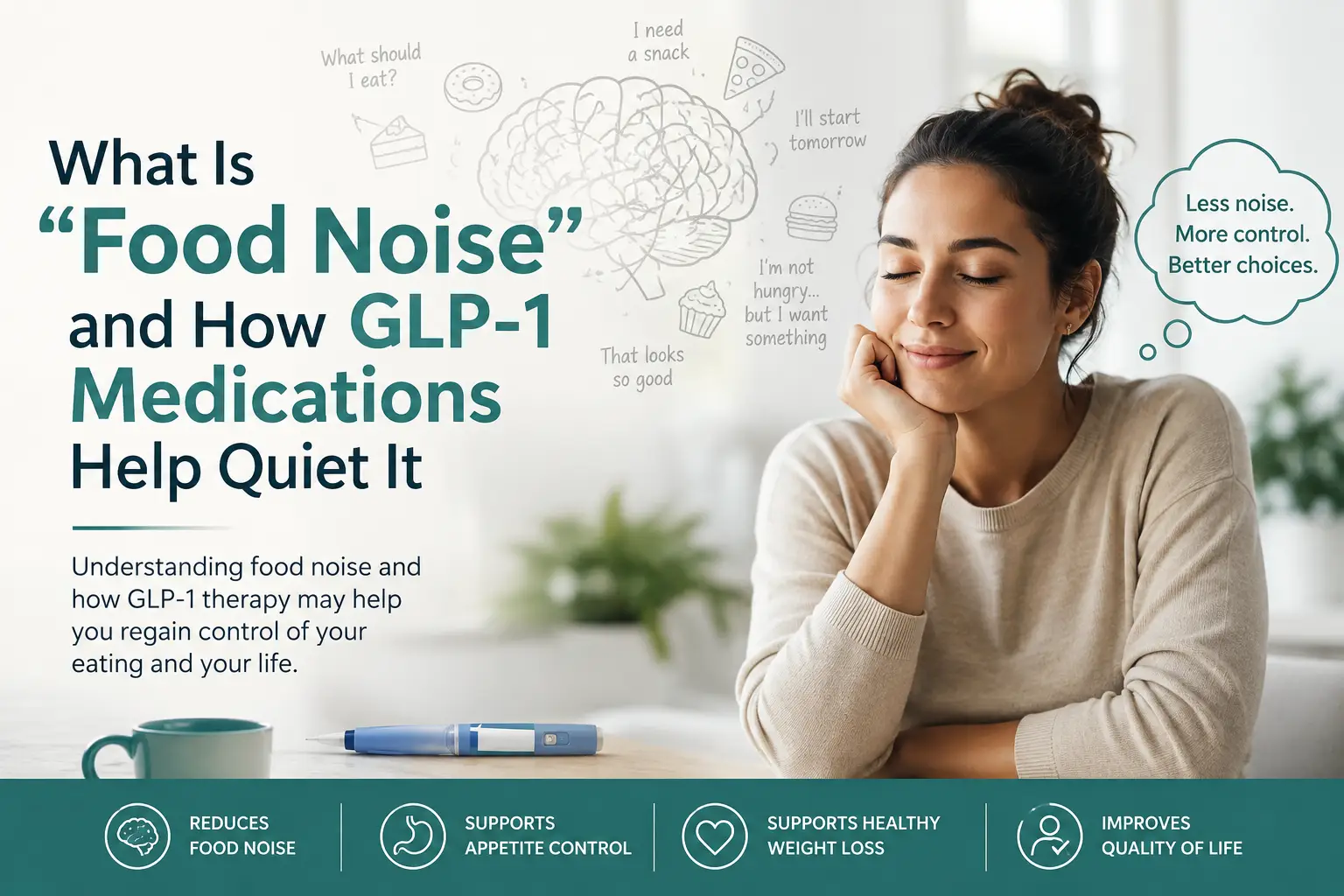
For many people, eating well isn’t the hard part. The hard part is the constant mental chatter about food—thoughts that show up uninvited, circle back throughout the day, and make sticking to a healthy eating plan feel like an uphill battle. This experience is often called “food noise,” and it’s one of the more overlooked challenges in weight management.
GLP-1 medications have gained significant attention for their role in appetite regulation and weight management. Some patients report that these treatments don’t just reduce hunger—they also quiet the persistent mental preoccupation with food that can undermine even the most motivated efforts. This post breaks down what food noise is, how GLP-1 medications affect appetite, and what you can realistically expect from treatment. As always, GLP-1 medications are prescription treatments that require evaluation by a qualified medical professional.
What Is Food Noise?
“Food noise” isn’t a formal medical diagnosis. It’s a widely used term that describes persistent, often intrusive thoughts and urges related to food—thoughts that show up even when you’re not physically hungry.
Common examples include:
- Thinking about what to eat when you just finished a meal
- Frequently planning your next snack or meal throughout the day
- Experiencing strong cravings triggered by seeing or smelling food
- Feeling like you’re constantly battling the urge to eat
- Repeatedly thinking about specific highly palatable foods, like sweets or salty snacks
Normal hunger is the body’s biological signal that it needs energy. Food noise is different. It’s the mental loop that keeps running regardless of whether your body actually needs fuel. Many people experience some level of food-related thinking, but for others, it becomes frequent, distracting, and difficult to manage.
What Causes Food Noise?
Food noise doesn’t stem from a single cause—and it’s not a sign of poor willpower. Several factors can contribute to persistent food-related thoughts:
Appetite and hunger signals. The brain and gut communicate through complex hormonal pathways that regulate hunger and satiety. When these signals are out of balance, thoughts about food can become more frequent and harder to dismiss.
Environmental food cues. Food is everywhere—on screens, in social settings, and in offices. Constant exposure to food-related stimuli can trigger cravings and reinforce habitual eating patterns.
Stress and emotional eating. For some people, food serves as a coping mechanism for stress, anxiety, or low mood. Over time, the brain can associate food with emotional relief, which amplifies food-related thinking during difficult periods.
Sleep and lifestyle factors. Poor sleep is associated with increased appetite and cravings, particularly for high-calorie foods. Fatigue can also reduce the mental energy needed to manage food-related urges.
Restrictive dieting. Highly restrictive eating plans can paradoxically increase food preoccupation. Research suggests that severe calorie restriction can intensify thoughts about food as the brain responds to perceived scarcity.
Individual differences in brain signaling. Appetite, reward, and satiety are regulated by brain chemistry that varies between individuals. Some people may simply experience stronger or more frequent food-related drive due to differences in how their brain processes hunger and reward signals.
How Do GLP-1 Medications Affect Appetite?
GLP-1 stands for glucagon-like peptide-1, a naturally occurring hormone produced in the gut. It plays a key role in regulating blood sugar and appetite—signaling to the brain that you’ve eaten and helping create a sense of fullness.
GLP-1-based medications work by mimicking or enhancing this hormone’s activity in the body. Their effects on appetite can include:
- Increased feelings of fullness after smaller amounts of food
- Reduced appetite, making it easier to follow a calorie-controlled eating plan
- Slower stomach emptying in some medications and individuals, which can contribute to prolonged satiety
- Influence on brain reward pathways associated with food cravings
GLP-1 medications don’t eliminate the need for healthy eating habits. Rather, they can create conditions that make those habits more achievable for some patients. Reduced appetite may lower the mental effort required to stick to a structured nutrition plan.
Food Noise and GLP-1: Can Treatment Help Quiet Persistent Food Thoughts?
This is one of the more compelling—and frequently discussed—aspects of GLP-1 treatment. Some people taking GLP-1-based medications report meaningful changes in their relationship with food, beyond just eating less.
Commonly reported experiences include:
- Fewer intrusive thoughts about food throughout the day
- Reduced cravings, particularly for highly palatable foods
- Less frequent urges to snack between meals
- Greater satisfaction with smaller portions
- Improved ability to recognize physical hunger and fullness cues
- Less preoccupation with food in general
These reports suggest that GLP-1 medications may influence not just physical appetite, but the mental dimension of eating as well—potentially acting on the brain’s reward and satiety systems. That said, individual responses vary. Not everyone experiences a reduction in food noise, and GLP-1 medications are not appropriate for every person or situation.
How GLP-1 Medications May Make Weight Management Easier
When appetite and food preoccupation decrease, the downstream effects on weight management can be significant. Patients who experience reduced food noise may find it easier to:
- Control portion sizes without constant mental effort
- Reduce snacking frequency
- Follow a structured nutrition plan more consistently
- Make food choices aligned with their health goals, rather than cravings
These behavioral changes, when sustained, can support meaningful weight loss over time. However, medication alone is rarely sufficient. A comprehensive approach to weight management typically includes nutrition guidance, physical activity, behavioral support, and regular medical monitoring. GLP-1 treatment, where appropriate, works best as one component of that broader plan—not a replacement for it.
Is Food Noise the Same as Hunger?
Not exactly. Hunger and food noise can overlap, but they’re distinct experiences. Understanding the difference can help patients and clinicians communicate more clearly about what someone is actually experiencing.
| Physical Hunger | Food Noise | |
| Onset | Develops gradually as the body needs energy | May occur even when physically full |
| Pattern | Builds over time | Can be persistent or repetitive |
| Food focus | Can be satisfied by a variety of foods | May fixate on specific foods |
| After eating | Usually resolves | Thoughts may continue despite eating |
This table is not a diagnostic tool—it’s a general framework to help distinguish between two different types of food-related experiences. In practice, hunger and food noise often occur together and can be difficult to separate.
Who Might Consider GLP-1 Weight Loss Treatment?
GLP-1 medications are prescription treatments. A qualified medical professional will determine whether this type of treatment is appropriate based on individual factors, which may include:
- BMI and weight-related health risks
- Existing medical conditions, such as type 2 diabetes or cardiovascular disease
- Previous weight-management attempts and outcomes
- Current medications and medical history
- Individual treatment goals and preferences
GLP-1 medications are not suitable for everyone. A thorough medical evaluation is essential before starting any prescription weight-management treatment.
What Should You Expect When Starting a GLP-1 Medication?
The process typically begins with a comprehensive medical evaluation, including a review of your health history, current medications, and weight-management goals. If treatment is recommended, your provider will develop an individualized plan that may include:
- Gradual dose adjustments to minimize side effects
- Regular monitoring of your response to treatment
- Ongoing support for nutrition and lifestyle habits
GLP-1 medications can cause side effects, particularly gastrointestinal symptoms such as nausea, vomiting, diarrhea, constipation, or abdominal discomfort. These are most common during dose increases and often improve over time. Always discuss side effects and any concerns with your healthcare provider.
Food Noise, GLP-1 Medications, and a Comprehensive Weight-Loss Plan
Effective weight management rarely comes down to a single intervention. At Laveen Medical Weight Loss, a comprehensive approach can bring together multiple elements:
- Medication, where clinically appropriate
- Nutrition guidance tailored to your health goals
- Physical activity recommendations
- Behavioral strategies to support sustainable change
- Regular medical monitoring to track progress and adjust treatment
Addressing food noise is part of a larger picture. When persistent food-related thoughts, cravings, and appetite challenges are treated alongside lifestyle factors, patients are often better positioned for long-term success.
Struggling with persistent food thoughts or appetite concerns? Contact Laveen Medical Weight Loss to discuss your weight-management options with a healthcare professional.
Frequently Asked Questions
Ans: – Food noise refers to persistent, often intrusive thoughts and urges related to food that occur outside of normal hunger. It can include frequent cravings, constant thinking about eating, and difficulty focusing on anything other than food. It is not a formal medical diagnosis, but it is a real and recognized experience for many people managing their weight.
Ans: – Some people taking GLP-1-based medications report a noticeable reduction in intrusive food thoughts, cravings, and urges to snack. However, individual responses vary significantly. GLP-1 medications may influence brain pathways involved in appetite and reward, but they do not eliminate food-related thoughts in every patient.
Ans: – GLP-1 medications mimic or enhance the activity of glucagon-like peptide-1, a naturally occurring hormone that signals fullness and helps regulate appetite. These medications can increase feelings of satiety, reduce overall appetite, and in some cases slow stomach emptying—making it easier for patients to follow a calorie-controlled eating plan.
Ans: – No. GLP-1 medications do not eliminate food cravings for most people. Many patients experience a meaningful reduction in cravings and food preoccupation, but the degree of change varies from person to person. These medications are most effective when combined with nutrition, behavioral, and lifestyle support.
Ans: – There is no universal timeline. Some patients report changes in appetite and food-related thoughts within the first few weeks of treatment, while others notice gradual changes as their dose is adjusted over time. Your healthcare provider will monitor your response and work with you to optimize treatment.