
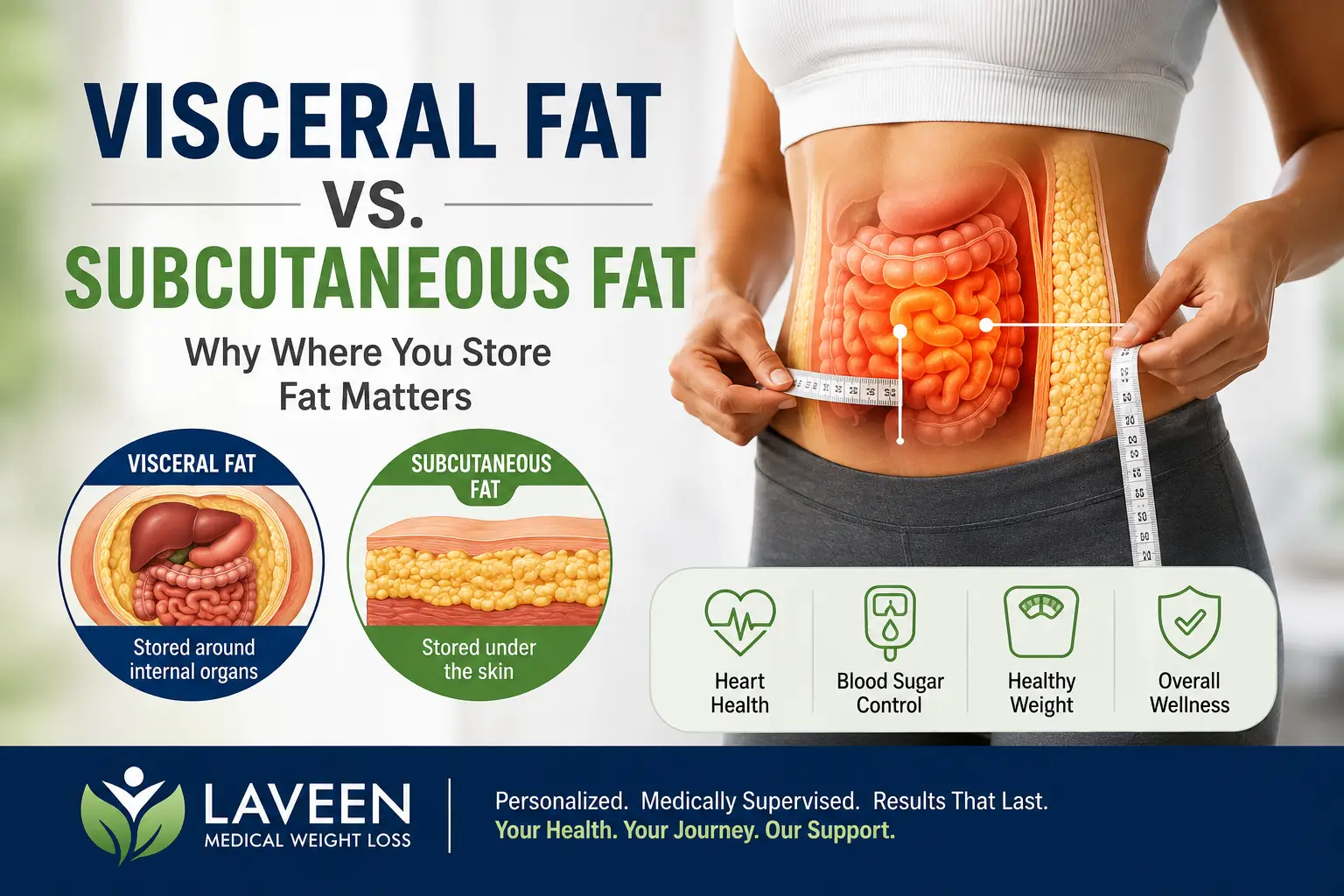
The number on the scale tells only part of the story. Two people can weigh exactly the same and have very different health profiles—because body fat isn’t distributed equally, and where fat is stored can influence health in meaningful ways.
Body fat generally falls into two main categories: visceral fat and subcutaneous fat. Understanding the difference between them can help you make more informed decisions about your health and explains why waist circumference and body composition often tell a more complete story than weight alone.
If you’ve been struggling with stubborn abdominal fat or have concerns about your metabolic health, this guide breaks down what you need to know—and when it might be time to speak with a weight loss specialist.
What Is Visceral Fat?
Where Is Visceral Fat Stored?
Visceral fat is stored deep within the abdominal cavity, surrounding vital internal organs including the liver, pancreas, and intestines. Unlike fat you can pinch, visceral fat sits beneath the abdominal muscles and is not always visible from the outside. A person can appear relatively lean and still carry a significant amount of visceral fat—which is one reason appearance alone isn’t a reliable gauge of metabolic health.
Why Is Visceral Fat a Health Concern?
Visceral fat is considered metabolically active, meaning it releases hormones and inflammatory compounds that can interfere with normal bodily functions. Excess visceral fat has been associated with an increased risk of:
- Insulin resistance
- Type 2 diabetes
- Cardiovascular disease
- High blood pressure
- Metabolic syndrome
Because visceral fat directly influences inflammation and hormone signaling, excess accumulation is viewed as a more significant health concern than most other types of body fat.
What Is Subcutaneous Fat?
Where Is Subcutaneous Fat Stored?
Subcutaneous fat sits directly beneath the skin and is the type of fat you can physically feel when you pinch your skin. It tends to accumulate in areas such as the:
- Abdomen
- Hips and thighs
- Buttocks
- Arms
This is the most common type of body fat and accounts for the majority of fat stored in the body.
Is Subcutaneous Fat Bad for You?
Not necessarily—at normal levels, subcutaneous fat serves important physiological functions. These include insulating the body against temperature changes, storing energy for later use, and cushioning muscles and bones against impact.
That said, carrying excess subcutaneous fat can still affect overall health, particularly when combined with other risk factors. The key is context: overall body composition, fat distribution, and individual health history all matter.
Visceral Fat vs. Subcutaneous Fat: What’s the Difference?
| Feature | Visceral Fat | Subcutaneous Fat |
| Location | Around internal organs | Under the skin |
| Visibility | Usually less visible | Often visible/pinchable |
| Metabolic activity | More metabolically active | Generally less metabolically active |
| Health concerns | Stronger association with metabolic disease | Health impact varies with amount and distribution |
| Common measurement | Waist circumference, imaging, body-composition assessments | Skinfolds, body-composition assessments |
The takeaway: how much fat you carry matters, but where it’s stored can be just as important.
How Can You Tell If You Have Too Much Visceral Fat?
Visceral fat can’t be precisely measured at home. However, waist circumference is widely used as a practical screening indicator of abdominal fat accumulation. A larger waist measurement tends to correlate with higher visceral fat levels, even when overall body weight appears normal.
BMI has notable limitations here—it reflects total body weight relative to height but provides no information about fat distribution. A person with a normal BMI could still carry excess visceral fat.
Healthcare providers may assess abdominal fat risk using a combination of waist measurements, medical and family history, physical examination, and body-composition testing. Imaging may be used in clinical settings when medically appropriate. If you have concerns, a conversation with your healthcare provider is the right starting point.
What Causes Visceral Fat to Increase?
Visceral fat accumulation isn’t simply a matter of willpower. Body-fat distribution is shaped by a complex mix of biological and lifestyle factors, including:
- Excess calorie intake sustained over time
- Physical inactivity
- Aging, which naturally shifts fat distribution toward the abdomen
- Poor sleep, which can disrupt appetite-regulating hormones
- Chronic stress, which elevates cortisol and promotes fat storage around the midsection
- Genetics and family history
- Hormonal and metabolic factors
- Excessive alcohol consumption
Recognizing these contributing factors matters—not to assign blame, but to understand why some people accumulate visceral fat more readily than others, and why sustainable strategies work better than quick fixes.
How to Reduce Visceral Fat
Focus on Sustainable Weight Loss
Research consistently shows that overall weight loss is one of the most effective ways to reduce visceral fat. Crash diets and extreme caloric restriction may produce short-term results, but they rarely lead to lasting change. Gradual, realistic weight-loss goals—supported by consistent habits—tend to be more effective over time.
Prioritize Protein and Fiber-Rich Foods
A balanced diet rich in lean proteins, vegetables, fruits, whole grains, and legumes can support satiety and healthier eating patterns. These foods help regulate blood sugar levels, reduce cravings, and provide the nutrients your body needs to function well.
Exercise Regularly
Both aerobic exercise (such as brisk walking, cycling, or swimming) and resistance training contribute to body-fat reduction and improved metabolic health. Regular physical activity also supports insulin sensitivity and cardiovascular function—two areas significantly affected by excess visceral fat.
Improve Sleep and Manage Stress
Sleep deprivation and chronic stress both affect the hormones that regulate appetite and fat storage. Poor sleep is linked to higher cortisol levels and increased cravings for calorie-dense foods. Prioritizing consistent sleep and building stress-management habits—whether through movement, mindfulness, or social support—can meaningfully support your body-composition goals.
Can Medical Weight Loss Help Reduce Visceral Fat?
For individuals who have made genuine efforts through lifestyle changes and continue to struggle, medically supervised weight management offers a more structured and personalized path forward.
A comprehensive program may include nutrition guidance, physical activity recommendations, behavioral strategies, full medical evaluation, and—when appropriate—FDA-approved weight-management medications. GLP-1 receptor agonists, for example, can support weight loss in eligible patients by influencing appetite and food intake. These medications are not suitable for everyone and should only be considered under physician supervision.
Medically supervised programs are designed to address the full picture of a patient’s health, not just the number on the scale. If you’ve been unable to achieve meaningful results on your own, professional guidance can make a significant difference.
Visceral Fat vs. Subcutaneous Fat: Which One Is More Dangerous?
Excess visceral fat generally presents a greater metabolic health concern than subcutaneous fat. Its proximity to vital organs and its metabolic activity make it more directly linked to conditions like type 2 diabetes, cardiovascular disease, and metabolic syndrome.
Subcutaneous fat, however, should not be dismissed entirely. Carrying excess body fat of any kind can affect health, particularly when other risk factors—elevated blood pressure, blood sugar, or cholesterol—are present. Overall health is multifactorial, and body composition is just one piece of the puzzle.
When Should You Talk to a Weight Loss Specialist?
Some situations call for more than general health advice. Consider reaching out to a weight loss professional if you’re experiencing:
- Difficulty losing weight despite consistent diet and exercise efforts
- An increasing waist circumference over time
- A family history of metabolic conditions such as type 2 diabetes or cardiovascular disease
- Weight-related health concerns identified by your doctor
- Repeated weight regain after losing weight
- Questions about whether prescription weight-loss medications may be appropriate for you
- A desire for a personalized, medically supervised plan
Laveen Medical Weight Loss serves patients in the Phoenix and Laveen area with individualized weight management programs designed to address the whole patient—not just the scale. Schedule a consultation to explore your options and get a clear picture of what’s actually driving your weight challenges.
Your Body Composition Tells a Fuller Story
Visceral fat and subcutaneous fat behave differently, carry different health implications, and respond to interventions in different ways. Excess visceral fat—the kind wrapped around your internal organs—poses a greater metabolic risk, but overall body composition, lifestyle, and medical history all factor into your long-term health outcomes.
Sustainable lifestyle changes remain the foundation of any effective approach to fat reduction. And for those who need additional support, medically supervised weight management can provide the structure, accountability, and clinical expertise to make meaningful progress. If you’re in the Phoenix area and ready to take a closer look at your health from a body-composition perspective, Laveen Medical Weight Loss is here to help. Reach out today to schedule your consultation.
FAQs
Ans: – Visceral fat is stored deep within the abdominal cavity, surrounding internal organs like the liver and pancreas. Subcutaneous fat sits just beneath the skin and is the type you can physically pinch. Visceral fat is more metabolically active and is more closely associated with metabolic health conditions.
Ans: – Excess visceral fat generally carries a greater metabolic health risk than subcutaneous fat, due to its proximity to vital organs and its role in inflammation and hormone signaling. Subcutaneous fat at normal levels is considered necessary and healthy, though carrying excess body fat of any kind can affect overall health.
Ans: – It’s possible to reduce visceral fat through lifestyle changes—such as increased physical activity and dietary improvements—even without large changes in total body weight. However, overall weight loss tends to be one of the most reliable ways to reduce visceral fat levels.
Ans: – The most evidence-supported strategies include maintaining a balanced, nutrient-dense diet, engaging in regular aerobic and resistance exercise, prioritizing quality sleep, and managing chronic stress. These habits work together to support healthier body composition over time.
Ans: – Yes. Regular aerobic activity, including brisk walking, has been shown to reduce visceral fat accumulation. Consistency matters more than intensity—making walking a daily habit can contribute meaningfully to metabolic health and body-fat reduction over time.