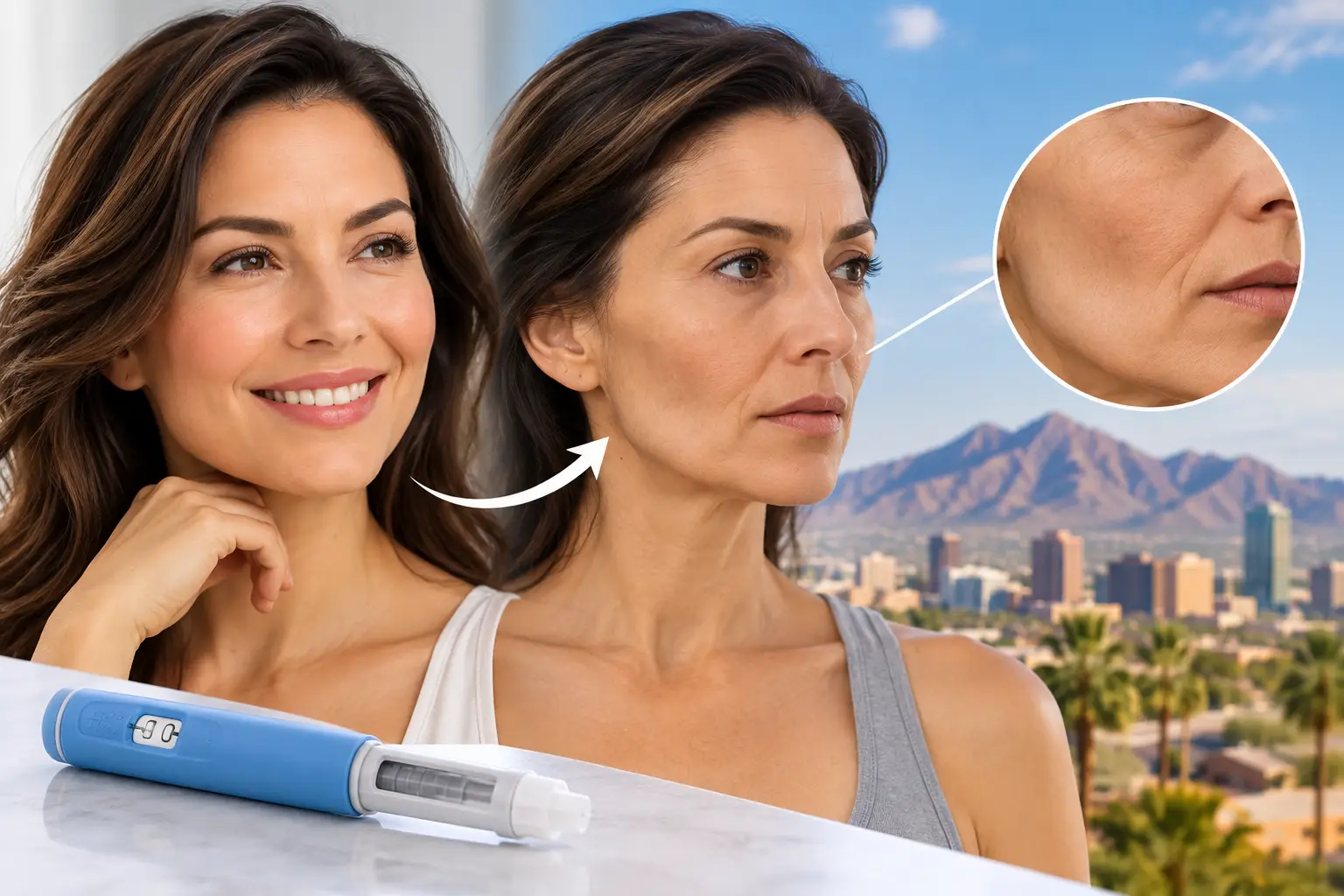
If you’ve spent any time on social media lately, you’ve probably come across the term “Ozempic face.” As semaglutide and other GLP-1 medications have become widely used for weight management, more people are noticing changes in their facial appearance alongside their weight loss progress. It’s a trending topic, but it’s also one that comes with a lot of confusion.
To be clear, “Ozempic face” isn’t an official medical diagnosis, nor is it a direct side effect listed on any medication label. Instead, it describes a set of facial changes—like hollowed cheeks or sagging skin—that tend to show up after significant or rapid weight loss. These changes happen because the face, like the rest of the body, loses fat volume during weight loss.
For Phoenix residents using semaglutide or similar medications, questions about maintaining a healthy, balanced appearance while losing weight are common and valid. This article breaks down what causes Ozempic face in Phoenix patients, what you can realistically do to minimize it, and when it makes sense to talk to a healthcare provider about your weight-loss plan.
What Does Ozempic Face Look Like?
Ozempic face symptoms typically include a handful of visible changes that come with substantial fat loss in the face:
- Hollow or sunken cheeks
- More prominent cheekbones
- A sunken appearance around the eyes
- Increased visibility of fine lines and wrinkles
- Loose or sagging facial skin
- Changes around the jawline and neck
- Thinner-looking lips or reduced facial fullness
It’s worth noting that these face changes after Ozempic aren’t unique to this particular medication. Facial changes after weight loss can occur with any significant reduction in body fat, regardless of the method used to achieve it.
What Causes Ozempic Face?
Several overlapping factors contribute to the appearance commonly referred to as Ozempic face.
Loss of Facial Fat
Weight loss doesn’t just target fat around the midsection or thighs—it reduces fat throughout the entire body, including the subcutaneous fat layer that gives the face its fullness. As this fat diminishes, the cheeks and area around the eyes can appear more hollow or angular than before.
Rapid Weight Loss
The speed at which you lose weight matters. When weight comes off quickly, the skin has less time to gradually adjust to the loss of underlying volume. Both the rate and total amount of weight loss play a role in how noticeable facial changes become.
Reduced Skin Elasticity
Skin’s ability to “bounce back” depends largely on collagen and elastin levels, both of which naturally decline with age. This is why older adults may be more likely to notice loose or sagging skin following substantial weight loss, compared to younger individuals with more elastic skin.
Changes in Body Composition
Weight loss isn’t only about shedding fat—maintaining muscle mass matters too. Adequate nutrition and attention to body composition during a medically supervised weight-loss program can influence how your face and body look as the pounds come off.
Does Ozempic Actually Cause Facial Aging?
This is one of the biggest misconceptions surrounding the topic. Ozempic doesn’t directly “age” your face. There’s no mechanism by which the medication itself accelerates aging or breaks down collagen. Rather, the term describes an appearance that’s associated with weight loss in general, not a medication-induced process.
In fact, similar facial changes are frequently observed after bariatric surgery or significant weight loss achieved purely through diet and lifestyle changes. The common denominator is the weight loss itself, not the specific tool used to get there.
If you notice unexpected or concerning facial changes while on a GLP-1 medication, it’s worth bringing up with your healthcare provider. But cosmetic concerns alone shouldn’t be a reason to stop a medication without medical guidance.
How to Help Prevent or Minimize Ozempic Face
While there’s no guaranteed way to completely prevent facial volume changes during substantial weight loss, several strategies can help minimize their impact.
1. Aim for Gradual, Medically Supervised Weight Loss
Rapid weight loss tends to produce more dramatic facial changes. Rather than pushing for the fastest results possible, work with a qualified healthcare professional who can determine appropriate medication dosing based on your individual needs.
2. Prioritize Adequate Protein
Getting enough protein supports muscle maintenance throughout the weight-loss process. A healthcare provider or registered dietitian can help you determine the right protein intake for your body and goals.
3. Stay Hydrated
Proper hydration supports overall health and skin function. That said, hydration alone can’t fully prevent facial volume loss—it’s one piece of a larger puzzle.
4. Include Strength Training
Resistance exercise helps preserve lean muscle mass while you lose excess body fat, which can support a more balanced overall appearance as you progress through your weight-loss journey.
5. Follow a Balanced Nutrition Plan
Focus on nutrient-dense foods—vegetables, fruits, whole grains, and appropriate protein sources—rather than overly restrictive dieting, which can compromise both your results and your health.
6. Protect Your Skin
Daily sunscreen and a consistent skincare routine can help protect your skin from premature, sun-related aging, which can compound the appearance of facial volume loss.
Can Ozempic Face Be Reversed?
Many patients wonder whether these facial changes are permanent. The honest answer is that it depends. As weight stabilizes, some facial fullness may return, and skin can gradually adapt over time. However, the degree of recovery varies based on factors like age, genetics, how much and how quickly weight was lost, and individual skin elasticity.
For some, persistent volume loss or noticeably loose skin may benefit from evaluation by a qualified dermatology or cosmetic professional. There’s no supplement, cream, or single treatment that can guarantee a complete reversal, so it’s important to set realistic expectations from the start.
Should You Stop Ozempic Because of Ozempic Face?
Cosmetic concerns alone generally aren’t a reason to stop or adjust a weight-loss medication without medical guidance. Any decision about your treatment should be based on a full picture of your health benefits, risks, response to treatment, and personal goals.
If facial changes are a concern, the better approach is to talk with your prescribing provider about the rate of your weight loss, your current nutrition and exercise habits, and your overall treatment plan. From there, your provider can help determine whether adjustments are appropriate.
Ozempic Face and Medical Weight Loss in Phoenix
For patients in the Phoenix area, an individualized, medically supervised approach to weight loss can make a meaningful difference in both results and overall experience. This means working with a provider who monitors your weight, vital signs, and progress throughout treatment, rather than navigating the process alone.
A well-rounded weight-loss plan should include more than just medication. Nutrition and lifestyle education, combined with semaglutide or other weight-loss options when clinically appropriate, give patients a more complete framework for success. Laveen Medical Weight Loss notes that its programs are built around individualized assessments, medical supervision, lifestyle education, and a range of weight-loss medication options tailored to each patient’s health history and goals.
If you’re interested in learning more, explore our semaglutide page, weight loss medications, weight loss injections, or medical weight loss programs, or check out our prices and plans.
When Should You Talk to a Healthcare Provider?
It’s a good idea to reach out to a healthcare provider if:
- Your weight is dropping unusually quickly
- You’re experiencing significant weakness or difficulty maintaining proper nutrition
- Facial changes are accompanied by other concerning symptoms
- You’re considering changing or stopping your medication
- You’re unsure whether your current pace of weight loss is appropriate
A provider can help you evaluate your treatment plan and make adjustments as needed to support both your health and your goals.
About Laveen Medical Weight Loss & Wellness
Laveen Medical Weight Loss & Wellness serves as a local resource for Phoenix-area patients seeking medically supervised weight management. The clinic offers individualized weight-loss approaches, thorough medical evaluations, ongoing monitoring, lifestyle education, and medication options including semaglutide and tirzepatide. If you’re considering semaglutide or have concerns about changes you’re noticing during weight loss, schedule a consultation today to discuss a treatment plan built around your individual needs and goals.
FAQs
Ans: – “Ozempic face” is a term used to describe facial changes—like hollow cheeks and sagging skin—that can occur after significant weight loss while taking Ozempic or similar GLP-1 medications. It’s not an official medical diagnosis.
Ans: – Ozempic doesn’t directly cause facial aging. The changes are linked to the weight loss itself, specifically the loss of facial fat, which can occur with any significant weight loss regardless of the method.
Ans: – While there’s no guaranteed prevention method, gradual weight loss, adequate protein intake, strength training, proper hydration, and a balanced nutrition plan can all help minimize the appearance of facial volume loss.
Ans: – Some facial fullness may return as weight stabilizes and skin adapts over time. Recovery varies based on age, genetics, and how much and how quickly weight was lost.
Ans: – No. Facial changes vary widely from person to person and depend on factors like the rate and amount of weight loss, age, and individual skin elasticity.