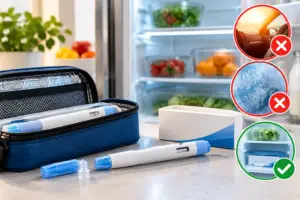

Semaglutide and tirzepatide have become two of the most talked-about tools in medical weight management, and interest keeps growing across Phoenix and beyond. As more people research these medications, a specific question keeps surfacing: what does it mean to “microdose” a GLP-1 medication, and could a smaller, slower approach work better for certain patients?
The truth is, “microdosing” doesn’t have one agreed-upon medical definition. Some people use the term to describe a prescribed low starting dose. Others use it to describe stretching out the time between dose increases. And some people use it to describe adjusting their medication amount entirely on their own, without medical guidance.
That last approach carries real risk. Changing the amount or frequency of a prescription without professional oversight can lead to dosing errors, unexpected side effects, and setbacks in your weight-management progress.
This article breaks down what GLP-1 microdosing actually means, why Phoenix patients are curious about it, and why individualized medical supervision should be at the center of any GLP-1 treatment plan.
What Does “Microdosing” GLP-1 Mean?
When people talk about microdosing GLP-1 medications, they’re usually describing the use of a lower dose or a slower-than-standard titration schedule. But this phrase gets applied to a few very different situations, and the distinctions matter.
Starting at a prescribed introductory dose. GLP-1 medications like semaglutide and tirzepatide are designed to begin at a low starting dose, which is then gradually increased according to the prescribing guidelines and how the patient responds.
Gradually increasing medication under medical supervision. A provider may choose to extend the time between dose increases if a patient is experiencing side effects or needs more time to adjust. This is still a supervised, clinically guided decision.
Taking an unapproved or self-selected “microdose.” This is where a patient decides on their own to use less medication than prescribed, split doses, or extend timing between injections without consulting their provider.
It’s worth being clear: GLP-1 microdosing is not a standardized treatment protocol. There’s no universal microdosing schedule that applies to every patient, and this article won’t provide one. Any changes to how much semaglutide or tirzepatide you take should come from a conversation with your prescribing provider, not a self-designed plan.
Why Are Phoenix Patients Interested in GLP-1 Microdosing?
Patients searching for information on microdosing GLP-1 in Phoenix tend to share a few common motivations:
- Concern about nausea or other gastrointestinal side effects that can come with standard dosing
- A desire to start treatment more gradually and ease into the medication
- Worry about taking “too much” medication too quickly
- Interest in a more individualized approach to weight management
- Curiosity about whether appetite control can be maintained on a lower amount
- Exposure to online and social-media discussions about microdosing trends
These are reasonable concerns. But interest in a gentler approach doesn’t mean microdosing has been proven to deliver the same results as an FDA-approved dosing regimen. The safest way to address these concerns is through a conversation with a medical provider, not through self-experimentation.
Can a Lower GLP-1 Dose Still Be Effective?
GLP-1 medications are built around specific dosing and titration schedules for a reason. That said, every patient responds differently. Factors like metabolism, medical history, and sensitivity to side effects all play a role in how someone reacts to a given dose.
Because of this variability, the “right” dose can look different from patient to patient. A provider typically evaluates several factors before making any adjustment, including:
- Appetite control
- Weight trends over time
- Side effects being experienced
- Medical history
- Other medications being taken
- Overall treatment goals
The goal of a GLP-1 treatment plan shouldn’t be finding the smallest possible dose for its own sake. It should be finding the appropriate, medically supervised dose that balances effectiveness with tolerability for that specific patient.
Potential Benefits of a Personalized GLP-1 Dosing Approach
Rather than framing “microdosing” itself as beneficial, it’s more accurate to talk about the value of individualized dosing and titration, guided by a medical provider. This approach may offer:
- Better tolerance for patients who are sensitive to side effects
- Close monitoring of side effects throughout treatment
- A more gradual adjustment schedule when clinically appropriate
- Ongoing evaluation of appetite and weight-management progress
- The ability for a provider to modify the treatment plan based on how a patient actually responds
Laveen Medical Weight Loss structures its weight-management approach around individualized planning paired with medical monitoring, rather than a one-size-fits-all dosing schedule.
Risks of Trying to Microdose GLP-1 Medications on Your Own
This is the section worth paying closest attention to. Attempting to microdose GLP-1 medications without medical guidance introduces several risks:
- Incorrect dosing. Without proper training, it’s easy to miscalculate the correct amount.
- Confusion between measurement units. Mixing up milligrams, milliliters, and syringe “units” is a common and serious error.
- Taking medication too frequently. Adjusting timing without guidance can lead to overlapping doses.
- Changing doses without professional guidance. This removes the safety net of medical oversight entirely.
- Side effects. Improper dosing can still cause nausea, vomiting, diarrhea, abdominal pain, and constipation.
- Inappropriate concentration with compounded medication. Compounded products can vary in strength, which increases the risk of error.
These risks aren’t hypothetical. The U.S. Food and Drug Administration has reported dosing errors involving compounded injectable semaglutide, including cases where patients unintentionally administered several times their intended dose (U.S. Food and Drug Administration).
Given these risks, readers should not attempt to calculate or create their own microdose. Any dosing decision belongs in the hands of a qualified medical provider.
Microdosing vs. Standard GLP-1 Titration
Here’s a simple way to compare the three approaches:
| Approach | What It Means |
| Standard titration | Medication is started at an appropriate introductory dose and increased according to the prescribing information and clinical response |
| Individualized titration | A healthcare provider evaluates tolerance and response before making adjustments |
| Self-directed microdosing | A patient independently changes the prescribed amount or frequency |
The third approach, self-directed microdosing, is the one most likely to create unnecessary safety risks. The first two involve medical oversight at every step. The third does not.
Is GLP-1 Microdosing Right for You?
There isn’t a one-size-fits-all answer to this question. Whether a lower dose or slower titration schedule makes sense depends on a range of individual factors that a provider can evaluate, including:
- Current weight and BMI
- Weight-related health conditions
- Previous weight-loss attempts
- Current medications
- Medical history
- Previous experience with GLP-1 medications
- Side effects or medication tolerance
- Individual weight-management goals
If you’re in Phoenix and considering a GLP-1 medication, the best next step is a direct conversation with a qualified medical professional before making any changes to your treatment.
What to Expect From a Medically Supervised GLP-1 Weight-Loss Program in Phoenix
A medically supervised program typically follows a structured process designed to keep treatment safe and effective:
- Initial evaluation. Your medical history and weight-management goals are reviewed in detail.
- Personalized treatment planning. Your provider determines whether a GLP-1 medication may be appropriate for your situation.
- Medication education. You’ll learn how to properly administer and store your medication, along with your prescribed dosing schedule.
- Ongoing monitoring. Your progress and any side effects are tracked throughout treatment.
- Lifestyle support. Nutrition, physical activity, and sustainable habits are incorporated to support long-term results.
Laveen Medical Weight Loss describes its program as including medical evaluations, body-composition analysis, medical supervision, weight-loss medications, and lifestyle education (Laveen Medical Weight Loss).
About Laveen Medical Weight Loss & Wellness
Laveen Medical Weight Loss & Wellness provides personalized medical weight-management services for patients in the Phoenix area. The clinic offers individualized treatment plans that may include prescription weight-loss medications, lifestyle education, body-composition analysis, and ongoing medical supervision. Its provider, Flora Stowater, is a dual-certified Family and Mental Health Nurse Practitioner with 19 years of nursing experience.
For patients considering GLP-1 medications, the focus is on understanding individual goals, medical history, medication tolerance, and progress, rather than assuming one approach works for everyone. Laveen Medical Weight Loss offers options including semaglutide and tirzepatide, and provides guidance throughout the weight-management process. Patients in Phoenix who are considering GLP-1 treatment can schedule a consultation to discuss whether a medically supervised approach is appropriate for them.
Final Takeaway
“Microdosing” GLP-1 medications has become a popular term, but it isn’t a standardized treatment approach. It shouldn’t be equated with medically appropriate low-dose initiation or titration, and it should never involve changing your GLP-1 dose independently. The safest, most effective path forward is individualized medical supervision. Considering GLP-1 treatment in Phoenix? Schedule a consultation with Laveen Medical Weight Loss & Wellness to discuss your weight-management goals and whether a medically supervised GLP-1 program may be appropriate for you.
FAQs
Ans: – GLP-1 microdosing generally refers to using a lower-than-standard dose or a slower titration schedule for medications like semaglutide or tirzepatide. The term is used inconsistently and doesn’t refer to one standardized medical protocol.
Ans: – No. GLP-1 medications are FDA-approved at specific doses and titration schedules outlined in their prescribing information. Microdosing, particularly when self-directed, falls outside of these approved guidelines.
Ans: – You should not change your prescribed dose or frequency on your own. Dosing adjustments should always be made in consultation with your prescribing medical provider to avoid errors and unwanted side effects.
Ans: – Not necessarily. Side effects vary by individual, and a lower dose doesn’t guarantee a reduction in symptoms. A provider can help evaluate your specific tolerance and response to determine the appropriate approach.
Ans: – There isn’t established evidence that self-directed microdosing produces the same results as an FDA-approved dosing regimen. An individualized, medically supervised treatment plan is the more reliable path to meaningful weight-management progress.