
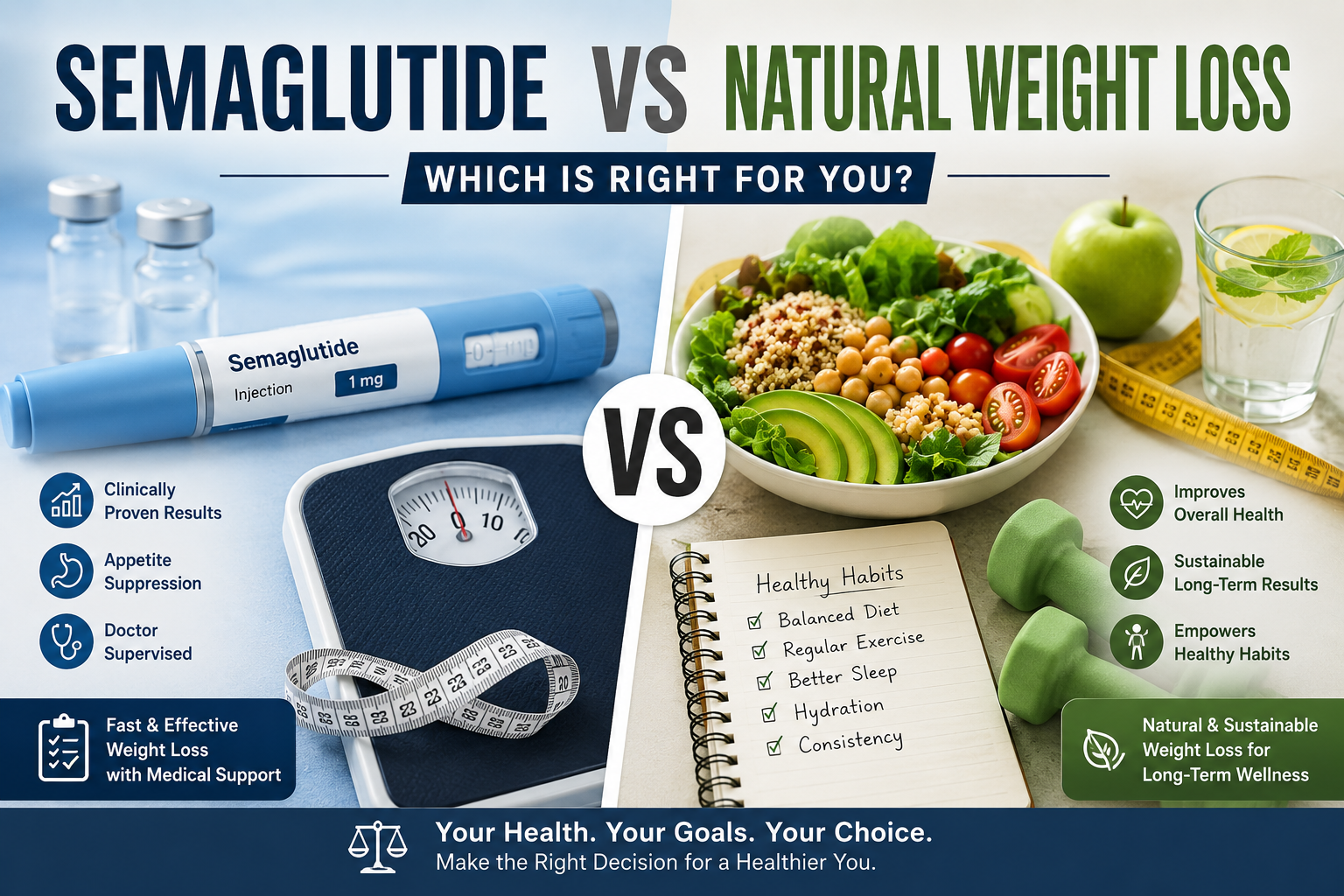
Weight loss is not one-size-fits-all. What works wonders for your neighbor might leave you frustrated after weeks of effort. So when it comes to shedding pounds, many people face the same question: are lifestyle changes alone enough, or can medications like Semaglutide deliver better results?
The truth is, the answer depends on you. Your health goals, medical history, and what you can realistically sustain over the long term all play a role. Some people thrive with diet and exercise alone. Others benefit from medical support to overcome stubborn obstacles like cravings or metabolic challenges.
This guide breaks down the semaglutide vs diet debate in plain terms. We’ll explore how each approach works, the pros and cons of medical vs natural weight loss, and how to decide which path fits your life. As you’ll see, the most powerful results often come from combining smart medical guidance with healthy daily habits.
Understanding Natural Weight Loss
What Is Natural Weight Loss?
Natural weight loss means losing weight through lifestyle changes rather than medication or surgery. It relies on consistent, everyday choices that add up over time. The core pillars include:
- Calorie control — eating fewer calories than your body burns
- Balanced nutrition — fueling your body with whole, nutrient-rich foods
- Regular exercise — staying active through cardio and strength training
- Better sleep — giving your body time to recover and regulate hormones
- Stress management — keeping cortisol levels in check to avoid emotional eating
Benefits of Natural Weight Loss
Choosing a natural approach comes with real advantages. For starters, it improves your overall health, not just your waistline. You also build lifelong healthy habits that stick with you for years. There’s no medication involved, which means no prescriptions to manage. And the long-term costs stay low, since you’re investing in food and movement rather than ongoing treatment.
Challenges of Diet-Only Weight Loss
Of course, going the natural route isn’t always easy. Progress can feel slow, especially in the beginning. Many people hit frustrating weight-loss plateaus where the scale refuses to budge. Hunger and cravings can test your willpower daily. And without quick wins, it’s hard to stay motivated for the long haul.
What Is Semaglutide?
Semaglutide is a prescription medication originally developed to treat type 2 diabetes. Today, it’s also widely used to support weight loss in eligible patients. It belongs to a class of drugs called GLP-1 receptor agonists.
How Semaglutide Works
Semaglutide works by mimicking a natural hormone in your body called GLP-1. This hormone plays a key role in appetite and digestion. Here’s what that means in practice:
- It helps control your appetite, so you feel less hungry throughout the day
- It slows stomach emptying, keeping you fuller for longer
- It improves the feeling of fullness after meals
- It supports a naturally reduced calorie intake without constant cravings
Who May Benefit Most?
Semaglutide isn’t for everyone. It tends to help certain groups the most, including:
- Adults living with obesity
- Individuals who are overweight and have weight-related medical conditions
- People who have struggled to lose weight through traditional dieting alone
Semaglutide vs Diet: What’s the Difference?
When you put the two approaches side by side, the differences become clear. The table below compares the key features of Semaglutide and a natural diet.
| Feature | Semaglutide | Natural Diet |
| Appetite Control | Strong | Moderate |
| Weight Loss Speed | Faster for many patients | Usually slower |
| Lifestyle Changes Required | Yes | Yes |
| Medical Supervision | Required | Optional |
| Long-Term Success | Best with healthy habits | Depends on consistency |
| Cost | Higher | Lower |
Notice that both options require lifestyle changes. Semaglutide is not a magic pill that works on its own—it performs best alongside healthy habits, just like a natural diet does.
Medical vs Natural Weight Loss: Pros and Cons
Both paths have strengths and trade-offs. Understanding them helps you make an informed choice.
Medical Weight Loss Pros
- Clinically guided by trained professionals
- Personalized treatment plans tailored to your body
- Stronger appetite control
- Proven effectiveness for eligible patients
Medical Weight Loss Cons
- Requires a prescription
- Possible side effects
- Needs regular follow-up appointments
Natural Weight Loss Pros
- Improves your overall lifestyle
- Affordable and accessible
- No medication side effects
Natural Weight Loss Cons
- Requires strong, consistent effort
- Progress may be slower
- Harder for people with hormonal or metabolic challenges
Can You Combine Semaglutide With Healthy Lifestyle Habits?
Absolutely—and you should. Semaglutide is a tool, not a replacement for healthy eating and movement. The medication can curb your appetite, but it can’t choose nutritious foods for you or build muscle on your behalf.
To get the most out of treatment, focus on these habits:
- High-protein meals to preserve muscle and keep you satisfied
- Strength training to maintain lean mass as you lose fat
- Daily walking to boost calorie burn and support heart health
- Hydration to aid digestion and curb false hunger signals
- Quality sleep to balance the hormones that control appetite
When you pair medical support with these daily habits, you set yourself up for results that actually last. The medication handles the biological hurdles, while your habits build the foundation for lifelong success.
Which Option Is Right for You?
There’s no universal answer, but a few personal factors can guide your decision:
- Current BMI — higher BMI may qualify you for medical treatment
- Existing health conditions — conditions like diabetes can influence your options
- Previous weight-loss attempts — repeated struggles may signal a need for extra support
- Lifestyle — consider what you can realistically maintain
- Budget — medication carries ongoing costs
- Long-term goals — think about where you want to be in a year, not just next month
Before making any decision, talk to a qualified medical weight loss provider. A professional can review your health history and recommend the safest, most effective plan for your situation.
Common Myths About Semaglutide
Misinformation about Semaglutide spreads fast. Let’s clear up a few of the most common myths.
Myth 1: Semaglutide is a shortcut. It’s a medical treatment that works best with effort and healthy habits, not a quick fix.
Myth 2: You don’t need to exercise. Physical activity protects your muscles and improves results while on the medication.
Myth 3: Everyone loses weight at the same rate. Results vary based on genetics, lifestyle, and individual biology.
Myth 4: You’ll regain all the weight immediately. With sustained habits and proper guidance, you can maintain your progress.
Myth 5: Natural weight loss is always better. Natural methods work for many, but some people genuinely benefit from medical support.
Tips for Long-Term Weight Loss Success
No matter which path you choose, these habits will help you keep the weight off for good:
- Eat enough protein to stay full and protect muscle
- Build sustainable habits you can maintain for years, not weeks
- Stay physically active with a mix of cardio and strength work
- Get 7–9 hours of sleep to support recovery and hormone balance
- Track your progress to stay accountable and motivated
- Work with healthcare professionals when you need expert guidance
Making the Right Choice for Your Body
The debate over semaglutide vs diet isn’t about crowning one universal winner. The most effective approach depends entirely on your individual health needs, goals, and medical history. For some, diet and exercise alone do the trick. Others, medically supervised treatment unlocks results that felt impossible before.
For many people, the sweet spot lies in combining both healthy lifestyle habits supported by medical guidance. This blend offers the greatest chance of achieving lasting results without sacrificing your well-being.
The smartest next step is simple: seek professional guidance. A qualified provider at Laveen Medical Weight Loss can help you determine the safest and most effective plan for your unique body and goals.
FAQs
Ans: – For some people, yes. Semaglutide offers stronger appetite control and faster results, especially for those who’ve struggled with traditional dieting. However, it works best when paired with healthy eating and exercise.
Ans: – Yes. Many people lose weight through calorie control, balanced nutrition, regular exercise, and good sleep. Natural weight loss requires consistency, but it improves your overall health.
Ans: – Yes. Exercise—especially strength training—helps preserve muscle and improves your results. The medication controls appetite, but movement keeps your body strong and healthy.
Ans: – Semaglutide is typically prescribed for adults with obesity or those who are overweight with weight-related health conditions. A medical provider can confirm whether you’re eligible.
Ans: – This depends on your individual situation and should be decided with your provider. Maintaining healthy habits is essential to keep the weight off after stopping treatment.
Ans: – The main difference is supervision and speed. Medical weight loss is clinically guided with stronger appetite control and often faster results, while natural weight loss relies on personal consistency and lifestyle changes.