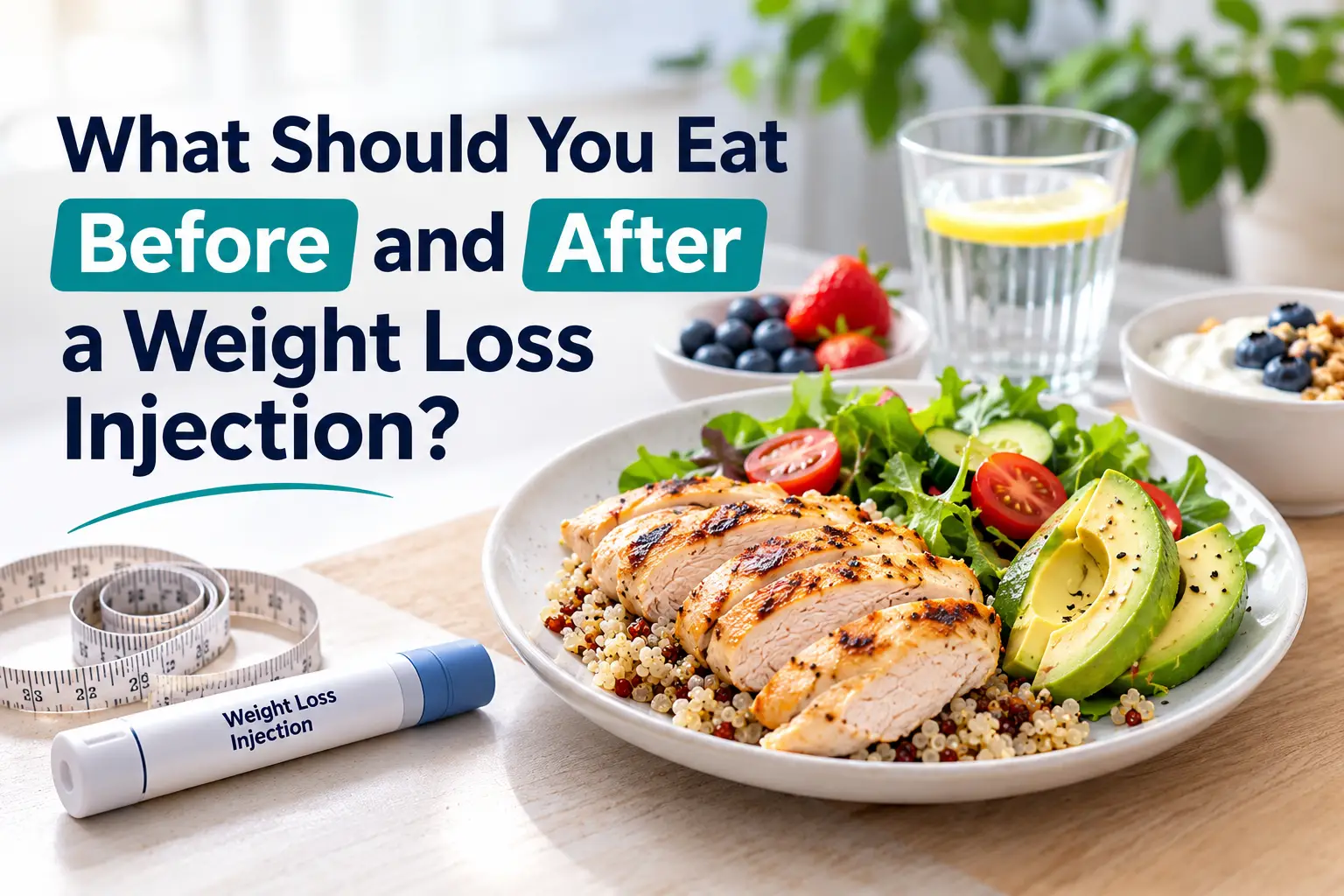
Starting a weight loss injection like semaglutide or tirzepatide can feel like a major turning point in your health journey. These GLP-1 medications have transformed medical weight management, helping patients curb appetite, stabilize blood sugar, and lose significant weight when combined with the right lifestyle habits.
But medication alone doesn’t do all the work. What you eat before and after your injection plays a direct role in how your body responds to treatment, how comfortable you feel, and how successful your results become over time.
Because these medications slow digestion and reduce appetite, many patients find themselves eating less overall. That’s often the goal, but it also means every bite needs to count. Choosing the right foods can help manage common side effects like nausea, bloating, or constipation, while still giving your body the nutrients it needs.
This guide walks through exactly what to eat after a weight loss injection, what to eat beforehand, and which foods to limit or avoid altogether.
Why Does Your Diet Matter When Taking Weight Loss Injections?
GLP-1 medications work by mimicking a hormone that regulates appetite and slows the rate at which food leaves your stomach. This leads to longer-lasting fullness, but it also means your digestive system is more sensitive than usual.
Because appetite drops significantly, it becomes easier to under-eat or miss out on essential nutrients. That’s why protein, fiber, vitamins, and minerals deserve extra attention during treatment. Protein helps preserve lean muscle mass while you lose weight, since muscle loss can slow metabolism and undermine long-term progress. Fiber supports digestion, which matters even more when your gut is already working at a slower pace.
Balanced nutrition isn’t just a nice-to-have. It’s what allows your body to lose fat rather than muscle, and it keeps you functioning well day to day. Medication can jumpstart results, but pairing it with healthy eating habits and movement is what sustains them.
What Should You Eat Before a Weight Loss Injection?
What you eat in the hours and days leading up to your injection can influence how your stomach responds once the medication takes effect.
Protein-Rich Foods
Lean protein helps stabilize blood sugar and keeps you satisfied longer. Good options include eggs, grilled chicken, fish, Greek yogurt, and tofu.
Complex Carbohydrates
Slow-digesting carbs provide steady energy without spiking blood sugar. Oatmeal, brown rice, quinoa, and sweet potatoes are reliable choices.
Healthy Fats and Vegetables
Avocados, nuts, olive oil, spinach, and broccoli offer healthy fats and micronutrients that support overall wellness without weighing down your digestive system.
Stay Hydrated Before Your Injection
Proper hydration matters just as much as food choices. Drink plenty of water throughout the day, and consider water-rich foods like cucumber and watermelon to support hydration naturally.
Most weekly GLP-1 injections don’t require fasting beforehand. Unless your healthcare provider gives you specific instructions, you can continue eating normally in the hours before your dose.
What to Eat After Weight Loss Injection?
The period following your injection is when many patients experience side effects like nausea or digestive discomfort, making food choices especially important.
Lean Protein for Muscle Maintenance
Chicken breast, eggs, fish, cottage cheese, and Greek yogurt should remain staples in your diet. Since appetite is reduced, prioritizing protein at each meal helps ensure you’re preserving muscle mass even as your overall calorie intake drops.
Fiber-Rich Foods for Digestive Health
Oatmeal, berries, apples, lentils, and vegetables support regular bowel movements, which can be disrupted by slower digestion. If you’re not used to eating much fiber, increase your intake gradually rather than all at once. A sudden jump can actually worsen bloating or discomfort.
Easily Digestible Foods When Experiencing Nausea
If nausea strikes, bland, easy-to-digest foods tend to sit better. Bananas, plain toast, rice, boiled potatoes, and vegetable soup are gentle on the stomach. Eating smaller portions more frequently, rather than three large meals, can also help minimize discomfort.
Hydrating Foods and Fluids
Water, soups, broths, and water-rich fruits support hydration, which becomes especially important if you’re experiencing nausea, vomiting, or reduced fluid intake from appetite suppression. Staying hydrated also helps prevent constipation, a common side effect of GLP-1 medications.
Foods to Avoid or Limit After Weight Loss Injections
Certain foods tend to aggravate side effects or work against your weight loss goals.
Fried and Greasy Foods
French fries, fried chicken, and other greasy fast food are harder to digest and can intensify nausea or stomach discomfort.
High-Sugar Foods
Cakes, pastries, sugary beverages, and desserts offer little nutritional value and can cause blood sugar fluctuations that leave you feeling worse.
Large and Heavy Meals
Because your stomach empties more slowly on GLP-1 medications, oversized portions can worsen nausea, bloating, and general discomfort. Smaller, more frequent meals are typically easier to manage.
Alcohol and Highly Processed Foods
Alcohol can irritate the digestive system and may interact with your medication, so it’s worth discussing alcohol consumption with your provider. Highly processed foods often lack fiber and nutrients while being harder on digestion overall.
Sample One-Day Meal Plan After a Weight Loss Injection
| Meal | Suggested Food Options |
| Breakfast | Oatmeal with Greek yogurt and berries |
| Morning snack | Banana or a handful of almonds |
| Lunch | Grilled chicken, brown rice, and vegetables |
| Afternoon snack | Cottage cheese or unsweetened yogurt |
| Dinner | Baked fish, boiled potatoes, and spinach |
| Hydration | Water throughout the day |
Every patient’s nutritional needs are different, so portion sizes and specific food choices should be personalized based on your goals, tolerance, and any guidance from your healthcare provider.
Practical Nutrition Tips for Better Weight Loss Results
A few consistent habits can make a meaningful difference in how well you respond to treatment:
- Eat smaller meals throughout the day instead of three large ones.
- Prioritize protein at every meal to protect muscle mass.
- Avoid overeating, even when food tolerance improves.
- Drink sufficient water to support digestion and overall health.
- Eat slowly and pay attention to fullness signals, since GLP-1 medications can delay that feeling.
- Include physical activity and strength training to preserve muscle and support metabolism.
- Follow your prescribed medication schedule consistently.
- Attend regular medical follow-ups to track progress and adjust your plan as needed.
When Should You Contact Your Healthcare Provider?
While mild digestive side effects are common with GLP-1 medications, certain symptoms warrant medical attention. Reach out to your provider if you experience:
- Persistent vomiting
- Severe or ongoing abdominal pain
- Signs of dehydration, such as dizziness or dark urine
- Difficulty eating or drinking for an extended period
- Digestive symptoms that interfere with daily activities
Never adjust your medication dosage on your own. Any changes to your treatment plan should be made in consultation with your healthcare provider.
Why Choose Medical Weight Loss Support in Phoenix?
Nutrition questions like these are exactly why medically supervised weight management makes such a difference. A personalized approach, one that accounts for your health history, side effects, and goals, helps you get more consistent, sustainable results than following a generic plan.
Laveen Medical Weight Loss & Wellness, located in Laveen, Arizona and serving the greater Phoenix area, offers exactly that kind of individualized support. The clinic provides a range of medical weight loss options, including injectable treatments, oral medications, supplements, body composition analysis, and ongoing provider consultations. Patients receive nutritional guidance and lifestyle coaching alongside their treatment, along with regular progress monitoring to keep their plan on track.
Whether you’re just starting to explore weight loss injections or looking for better support with an existing treatment plan, having a knowledgeable provider in your corner can make the process smoother and more effective.
Contact Laveen Medical Weight Loss & Wellness to discuss personalized weight management options and find a nutrition plan that fits your needs.
FAQs
Stick to light, easily digestible foods like lean protein, cooked vegetables, or a small portion of rice. Avoid heavy, greasy, or very large meals in the hours right after your injection, since your digestion will be slower than usual.
Yes, most weekly GLP-1 injections don’t require fasting. You can eat a normal, balanced meal beforehand unless your provider has given you different instructions.
Coffee is generally fine for most patients, though it can worsen nausea or stomach upset for some. Pay attention to how your body responds, and consider reducing your intake if you notice discomfort.
Yes, rice is a gentle, easily digestible option that many patients tolerate well, especially white rice when experiencing nausea.
Limit fried and greasy foods, high-sugar treats, large or heavy meals, and alcohol. These can all worsen digestive side effects like nausea, bloating, or discomfort.