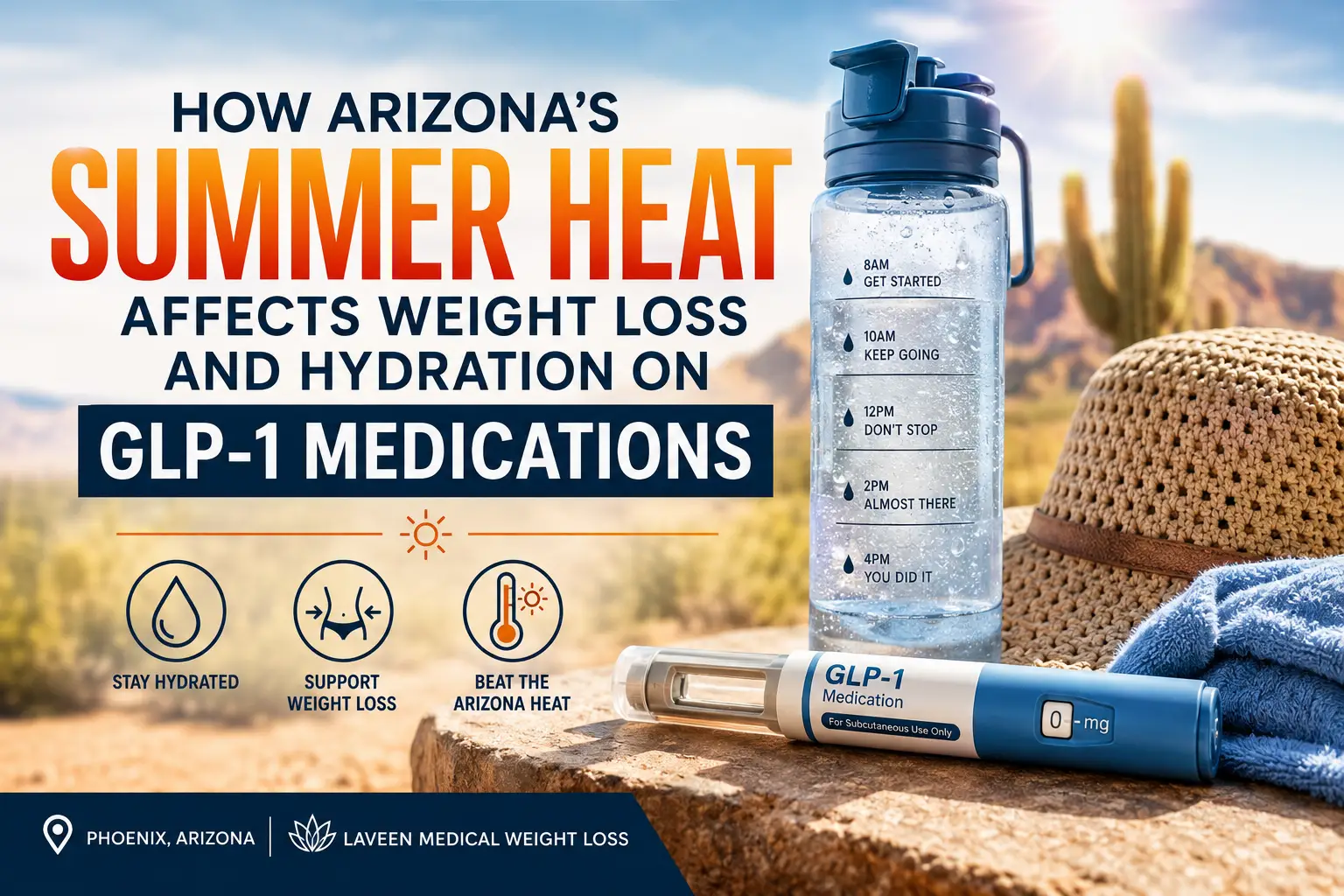
Arizona summers don’t ease anyone in gently. Temperatures in Phoenix routinely exceed 110°F between June and September, turning something as simple as a walk to the car into a sweaty ordeal. For adults using GLP-1 medications like semaglutide (Ozempic, Wegovy) or tirzepatide (Mounjaro, Zepbound) for medically supervised weight management, that heat adds a layer of complexity to an already significant lifestyle change.
GLP-1 medications work partly by reducing appetite and slowing digestion. That’s what makes them effective for weight loss—but it can also mean people eat and drink less than they realize. Add in common gastrointestinal side effects such as nausea, vomiting, and diarrhea, and maintaining adequate fluid intake becomes a more active priority. When those effects meet Arizona’s summer heat, having a clear hydration strategy isn’t optional. It’s essential.
Why Arizona Summer Heat Can Affect Your Weight-Loss Routine
Phoenix summers are among the most extreme in the continental United States. Sustained heat at this level increases the body’s fluid losses through sweat, even during low-intensity activities. Walking your dog at 8 AM, running errands, or doing light yard work can all result in more fluid loss than those same activities would in a cooler climate.
For people pursuing Arizona summer weight loss goals, this creates real challenges. Outdoor exercise becomes physically harder, which can disrupt routines and progress. Heat-related symptoms—fatigue, headaches, dizziness, and weakness—may also be mistaken for medication side effects or signs of poor nutrition, making it harder to identify the actual cause.
Dehydration can reduce your capacity to stay active, which matters for long-term weight management. Practical adjustments help: scheduling outdoor workouts for early morning or after sunset, using shaded walking paths, and taking regular cooling breaks in air-conditioned spaces. Staying hydrated in Arizona requires more intentional effort than in most other states—and that’s doubly true when you’re on a medication that changes how you eat and drink.
How GLP-1 Medications Can Change Your Hydration Routine
GLP-1 receptor agonists like semaglutide and tirzepatide affect both appetite and gastrointestinal function. These effects are central to how they support weight loss—but they also require some adjustment when it comes to fluid intake.
Reduced appetite doesn’t just mean eating less food. Many people also find themselves consuming fewer beverages throughout the day, simply because the normal hunger and thirst cues that would prompt them to eat or drink feel muted. Feeling full sooner can change familiar meal and drink habits in ways that are easy to overlook.
Nausea—one of the most commonly reported side effects of both semaglutide and tirzepatide, according to the FDA—can make drinking large amounts at once uncomfortable. Vomiting and diarrhea, which are also identified by the FDA as adverse effects associated with these medications, can increase fluid losses directly.
It’s important to be clear here: GLP-1 medications are not classified as causing dehydration or heat intolerance. However, certain medication-related effects can make it harder to maintain adequate fluid intake, particularly when those effects overlap with Arizona’s heat and increased sweating. The combination—reduced intake, potential GI fluid losses, and high ambient temperatures—is what makes hydration a priority worth actively managing.
Signs You May Not Be Getting Enough Fluids
Recognizing early dehydration is important, especially when some symptoms can overlap with medication side effects. Watch for:
- Increased thirst
- Dry mouth
- Darker than usual urine
- Headache
- Fatigue or unusual weakness
- Dizziness or lightheadedness
- Reduced tolerance for exercise
- Nausea that worsens in the heat
These are signs that your body needs more fluids. However, symptoms such as confusion, fainting, severe weakness, very high body temperature, or loss of consciousness indicate a medical emergency. If you or someone with you experiences these signs of dehydration while taking GLP-1 medication, seek prompt medical attention rather than waiting to see if symptoms resolve on their own.
7 Hydration Tips for Taking GLP-1 Medications in Arizona Heat
1. Sip Fluids Throughout the Day
Rather than waiting until you’re very thirsty, treat hydration as a scheduled habit. Keep water nearby during work, meals, and rest. Small, consistent amounts throughout the day are easier to manage—especially if nausea is present—than larger amounts consumed infrequently.
2. Increase Attention to Hydration When You’re Active
Walking, hiking, and any outdoor activity in Arizona heat accelerate fluid loss. Plan to drink before, during, and after exercise, even if you don’t feel thirsty. This is especially relevant for summer weight-loss tips that involve outdoor activity in Phoenix, where heat accumulates rapidly.
3. Don’t Rely Only on Thirst
GLP-1 medications may change how reliably you notice thirst alongside appetite. If you’re eating less and your normal meal-and-drink patterns have shifted, it’s worth building hydration reminders into your routine rather than depending on thirst alone.
4. Choose Water-Rich Foods
Even when appetite is reduced, the foods you do eat can contribute to your fluid intake. High-water-content options include:
- Cucumbers
- Watermelon and cantaloupe
- Oranges and berries
- Lettuce, celery, and other leafy vegetables
These can be easier to tolerate in smaller portions and help support hydration alongside your fluid intake.
5. Consider Electrolytes When Appropriate
Electrolyte beverages are not necessary for everyone. For most people on a typical daily routine, water is sufficient. However, if you’re experiencing prolonged sweating during exercise, or fluid losses from GI symptoms, electrolytes may be worth discussing with your healthcare provider. Individual needs vary, and your provider can offer the most relevant guidance for your specific situation.
6. Adjust Your Exercise Schedule
The CDC recommends performing outdoor physical activity during the coolest parts of the day and taking regular breaks from heat exposure. In Phoenix during summer, that generally means early morning before 7 AM or evening after sunset. Midday and afternoon heat is not just uncomfortable—it can be dangerous, particularly when combined with any degree of dehydration.
7. Keep Your Healthcare Provider Informed
If you’re experiencing persistent vomiting, diarrhea, significant dizziness, or difficulty keeping fluids down, contact your provider. These are not situations to manage alone or push through. Your care team can assess whether your medication dosage needs review or whether additional support is needed.
Can Dehydration Affect Your Weight-Loss Progress?
This is a question worth addressing directly, because the scale can be confusing during summer months. Changes in body water can cause short-term fluctuations in weight. A sudden drop on the scale after a hot day or a bout of GI symptoms doesn’t necessarily mean you’ve lost additional fat—it may simply reflect reduced fluid levels.
Long-term, sustainable weight management depends on consistent nutrition, physical activity, quality sleep, behavioral changes, and an appropriate medical treatment plan. Hydration supports that process by keeping your body functioning normally and helping you maintain the daily routines that contribute to lasting results. Drinking adequate fluids isn’t a weight-loss strategy on its own, but it’s part of the foundation that makes everything else work.
What to Do If GLP-1 Side Effects Make Drinking Difficult
Nausea in particular can make the idea of drinking a full glass of water feel unappealing. A few strategies can help:
- Take small, frequent sips rather than drinking large amounts at once
- Choose fluids that feel easier to tolerate, such as water at room temperature or a light electrolyte drink
- Eat smaller meals if nausea is worsened by eating and drinking together
- Avoid foods or beverages that seem to worsen your individual symptoms
- Contact your prescribing provider if vomiting or diarrhea persists beyond a day or two
One important note: never adjust, skip, or stop your GLP-1 medication because of hot weather or side effects without speaking to your provider first. The FDA has highlighted safety concerns surrounding inappropriate dosing, including with compounded GLP-1 products. Any changes to your medication should be made with medical guidance.
A Simple Daily Routine for Arizona Summers on GLP-1 Medications
Morning: Start your day with fluids before the heat builds. Eat a balanced, protein-focused breakfast if tolerated. Check the day’s forecast so you can plan your activities accordingly.
Midday: Keep physical activity indoors during peak heat hours. Continue sipping fluids throughout the afternoon. Prioritize nutrient-dense food choices even when appetite is low.
Evening: If you plan to exercise outdoors, this is the better window. Replace fluids after activity and watch for any symptoms of dehydration before going to sleep.
This isn’t a rigid prescription—it’s a flexible structure you can adapt to your schedule and how you’re feeling each day.
When Should You Contact Your Healthcare Provider?
Reach out to your provider if you experience any of the following:
- Persistent vomiting or diarrhea
- Difficulty keeping fluids down
- Significant dizziness or fainting
- Symptoms of notable dehydration
- Severe weakness or fatigue
- Any signs of heat-related illness
- Questions or concerns about your medication dosage or side effects
Do not attempt to independently manage these issues by adjusting your medication. Your healthcare team is the right resource—and they’ve seen these situations before.
FAQs
Ans: – GLP-1 medications like semaglutide and tirzepatide are not classified as causing dehydration directly. However, side effects such as nausea, vomiting, reduced appetite, and diarrhea can make it harder to maintain adequate fluid intake. When these effects are combined with Arizona’s summer heat and increased sweating, fluid intake requires more active attention.
Ans: – General hydration guidelines suggest around 8 cups (64 oz) of water per day for most adults, but needs increase with heat, physical activity, and any fluid losses from GI symptoms. Your healthcare provider can offer guidance specific to your health status, activity level, and medication.
Ans: – Dehydration can cause short-term weight fluctuations due to changes in body water, which may appear as weight loss on the scale. These changes don’t reflect fat loss. Adequate hydration supports normal body function and helps you maintain the activity and nutrition habits that contribute to sustainable weight management.
Ans: – Not necessarily. Water is sufficient for most people in typical daily conditions. Electrolyte beverages may be worth considering during prolonged physical activity in the heat or after GI fluid losses. Talk to your healthcare provider before making this a regular part of your routine.
Ans: – Yes, but timing matters in Arizona. The CDC recommends avoiding outdoor activity during peak heat hours and scheduling exercise for early morning or evening. If you experience dizziness, unusual weakness, or worsening nausea during exercise, stop and seek shade and fluids. Contact your provider if symptoms persist.