GLP-1 medications like semaglutide and tirzepatide have helped many people achieve meaningful, sustained weight loss by reducing appetite and lowering overall food intake. But as the number on the scale drops, a common concern comes up: am I losing muscle along with fat?
It’s a fair question—and an important one. Some reduction in lean mass can occur during any significant weight-loss process, whether or not medication is involved. However, losing lean mass is not the same as losing skeletal muscle, and current evidence does not suggest GLP-1 medications consistently cause disproportionate muscle wasting. The real goal of medical weight loss isn’t simply a lower number on the scale. It’s improving body composition while preserving the strength, function, and metabolic health that support long-term wellbeing. With the right strategies—adequate protein, resistance training, balanced nutrition, hydration, and clinical monitoring—you can protect your muscle while still making meaningful progress.
Can GLP-1 Medications Cause Muscle Loss?
Any substantial calorie deficit can lead to changes in body composition, including some reduction in lean tissue alongside fat. People taking GLP-1 receptor agonists such as semaglutide (Ozempic, Wegovy) or tirzepatide (Mounjaro, Zepbound) often experience significant appetite suppression, which can result in eating far less than before. When total calorie intake drops sharply, the body may draw on lean tissue as an energy source—making the quality of what you eat, and how you move, especially important.
It’s worth understanding the terminology here. “Lean mass” or “fat-free mass” includes muscle, bone, organs, connective tissue, and water. “Skeletal muscle” is only one component. Studies measuring lean mass changes during GLP-1 therapy may be capturing shifts in body water or other tissues, not necessarily a loss of functional muscle. Current evidence does not suggest that GLP-1 medications cause disproportionate muscle loss or impaired muscle function compared to other approaches to weight loss producing a similar calorie deficit.
That said, preserving skeletal muscle during weight loss remains a clear priority. Muscle supports strength, mobility, and metabolism—all of which matter for sustainable results and quality of life.
Why Preserving Muscle Matters During Weight Loss
Muscle is not just about aesthetics. It plays a central role in how your body functions day to day. Here’s why protecting it matters:
- Strength and mobility: Adequate muscle mass supports everyday activities—climbing stairs, carrying groceries, getting up from a chair. Losing too much functional muscle can make these tasks harder over time.
- Metabolic health: Skeletal muscle is metabolically active tissue. Maintaining it helps support healthy blood sugar regulation and energy expenditure.
- Long-term weight management: People who preserve more muscle during weight loss tend to have an easier time sustaining their results, partly because muscle helps maintain a higher resting metabolism.
- Reducing excessive lean tissue loss: A moderate reduction in lean mass alongside fat loss is expected during significant weight loss. The goal is to minimize unnecessary muscle loss, not to expect zero change.
The scale alone cannot tell you whether your weight loss is coming from fat, lean tissue, or water. That’s why tracking strength, physical function, and body composition—not just body weight—gives a more complete picture of your progress.
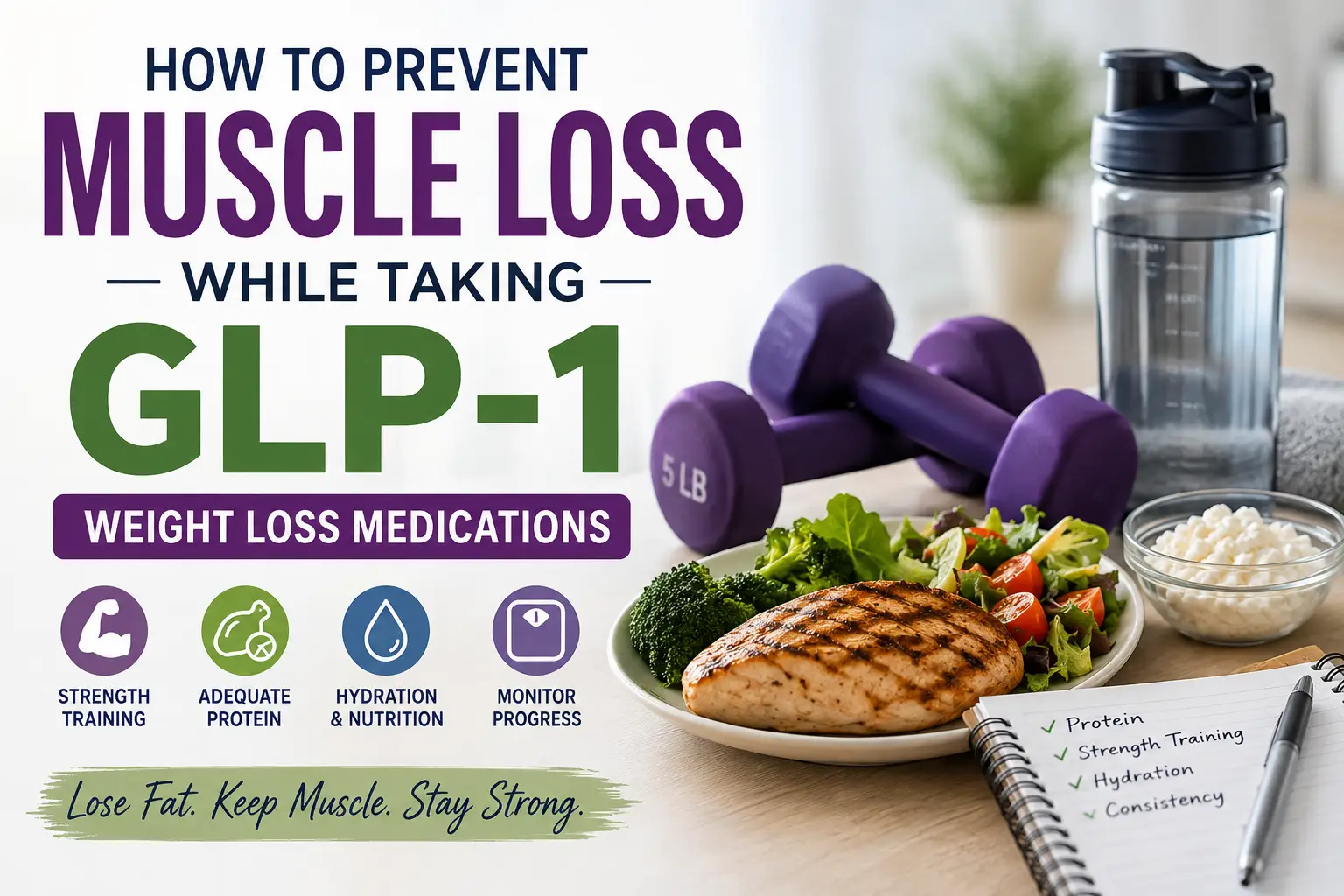
6 Ways to Help Prevent Muscle Loss on GLP-1 Medication
1. Prioritize Adequate Protein
Protein is the most important dietary factor for maintaining muscle during a calorie deficit. It provides the amino acids your body needs to repair and build muscle tissue, and it helps reduce the breakdown of existing muscle when overall energy intake is low.
Practical protein sources include:
- Eggs and egg whites
- Poultry (chicken, turkey)
- Fish and seafood
- Greek yogurt and cottage cheese
- Beans, lentils, and legumes
- Tofu and other soy-based products
- Lean meats
Individual protein needs vary based on body size, age, activity level, kidney health, and other health factors. Some recent nutrition reviews suggest that adults working toward weight loss may benefit from approximately 1.2–1.6 g of protein per kilogram of body weight per day, but this range should be individualized with guidance from a qualified healthcare professional—particularly for those with kidney conditions or other medical considerations.
2. Add Resistance Training to Your Routine
Resistance exercise is the most evidence-supported strategy for preserving fat-free mass during weight loss. Strength training signals the body to hold onto muscle even while overall calorie intake is reduced.
You don’t need a gym membership or heavy weights to get started. Effective options include:
- Squats or chair squats
- Lunges
- Resistance bands
- Dumbbell exercises
- Weight machines
- Bodyweight exercises such as push-ups or step-ups
The key is gradual, consistent progression. Starting with lighter resistance and building over time reduces injury risk and helps maintain motivation. Aim for two to three sessions per week, focusing on major muscle groups.
3. Avoid Extremely Restrictive Diets
GLP-1 medications can dramatically reduce appetite, sometimes to the point where eating feels effortful. This is part of what makes them effective—but it also creates a risk. Eating too little makes it difficult to meet protein targets and get the micronutrients your body needs to function well.
Focus on nutrient-dense meals rather than eating as little as possible. Crash diets amplify the lean tissue loss that can occur during rapid weight reduction and may leave you feeling weak, fatigued, or nutritionally depleted. The goal is purposeful calorie reduction with sufficient protein and micronutrient intake—not extreme restriction.
4. Stay Hydrated and Support Overall Nutrition
Adequate hydration matters especially when taking GLP-1 medications, as side effects like nausea, vomiting, or diarrhea can increase the risk of dehydration. Drinking enough water throughout the day supports digestion, circulation, and overall physical function.
When appetite allows, aim to build meals around protein, vegetables, fruits, whole grains, and healthy fats. Each of these food groups contributes something your body needs during weight loss—fiber, vitamins, minerals, and essential fatty acids among them. If persistent gastrointestinal symptoms are making it difficult to eat or drink adequately, discuss this with your healthcare provider rather than managing it independently.
5. Include Regular Physical Activity
Resistance training is important, but general physical activity adds its own benefits. Walking, cycling, swimming, or any activity you enjoy helps maintain cardiovascular fitness, supports mood and energy levels, and contributes to overall calorie balance.
Combining aerobic activity with resistance exercise produces better outcomes for body composition than either approach alone. You don’t need to do both on the same day—spreading activity across the week in a way that fits your schedule and energy levels is perfectly effective.
6. Monitor Your Progress Beyond the Scale
Tracking only body weight gives an incomplete view of how your body is responding to treatment. Consider monitoring:
- Strength levels and physical performance
- Waist circumference and how your clothes fit
- Energy levels throughout the day
- Your ability to perform everyday activities
Healthcare professionals may use body composition assessments—such as DEXA scans or bioelectrical impedance—when clinically appropriate to get a clearer picture of fat versus lean mass changes. Current guidance recommends risk-based monitoring rather than defaulting to body weight alone. If you notice unexpected weakness, difficulty with normal activities, or feel your nutritional intake has dropped too low, bring it up with your provider.
What Should You Eat While Taking a GLP-1 Medication?
A simple meal framework to support muscle preservation and overall health:
- Protein: Include a protein-rich food at every meal—eggs, chicken, fish, yogurt, legumes, or tofu.
- Produce: Add vegetables and fruits for fiber, vitamins, and minerals.
- Carbohydrates: Choose nutrient-dense options like oats, beans, sweet potatoes, or whole-grain bread rather than refined or processed carbs.
- Healthy fats: Include avocado, nuts, seeds, or olive oil in moderate amounts to support satiety and nutrient absorption.
- Fluids: Sip water consistently throughout the day, especially if nausea or reduced appetite is affecting your intake.
Because appetite suppression may make large meals uncomfortable, smaller and more frequent nutrient-dense meals can be a practical solution for many people on GLP-1 therapy.
When Should You Talk to Your Weight Loss Provider?
Certain signs warrant a conversation with your prescribing clinician sooner rather than later:
- Persistent inability to eat enough to meet basic nutritional needs
- Significant or unexplained weakness or fatigue
- Difficulty performing activities that were previously manageable
- Ongoing vomiting or severe gastrointestinal symptoms
- Very rapid weight loss
- Concerns about declining strength or muscle function
Never adjust your medication dose or stop treatment on your own based on how your body composition appears to be changing. These decisions should always be made with your prescribing clinician, who can evaluate the full clinical picture and adjust your plan accordingly.
The Goal Is Healthy Weight Loss, Not Just Weight Loss
Successful medical weight loss is about more than a lower number on the scale. It means reducing excess body fat while maintaining the muscle, strength, and physical function that support a long, active life. GLP-1 medications are a powerful tool—but they work best as one component of a comprehensive plan that includes thoughtful nutrition, regular exercise, and ongoing medical supervision.
At Laveen Medical Weight Loss, we take an individualized approach to weight management. Our care team works with you to address not just how much weight you’re losing, but how you’re losing it—so your results are sustainable and your health is protected at every step. Ready to pursue weight loss while protecting your strength and lean muscle? Contact Laveen Medical Weight Loss to discuss a personalized treatment plan.
FAQs
Ans: – Not necessarily. Some reduction in lean mass can occur during any significant weight-loss process, but this does not mean everyone on GLP-1 therapy experiences harmful muscle loss. Current evidence does not show that GLP-1 medications cause disproportionate muscle wasting compared to other weight-loss approaches. With adequate protein and resistance training, many people preserve functional muscle effectively.
Ans: – The most effective strategies are eating enough protein at each meal, incorporating resistance training two to three times per week, avoiding extremely restrictive diets, staying hydrated, and monitoring your physical function—not just your weight. Working with a healthcare provider or dietitian can help you personalize these strategies for your situation.
Ans: – Individual needs vary. Some recent nutrition reviews suggest a range of approximately 1.2–1.6 g of protein per kilogram of body weight per day for adults in a calorie deficit, but this depends on factors like age, body size, activity level, and kidney health. A qualified healthcare professional can recommend the right target for you.
Ans: – Walking is beneficial for overall health and fitness, but it is not sufficient on its own to prevent muscle loss. Resistance training—using weights, resistance bands, or bodyweight exercises—directly stimulates muscle tissue in a way that aerobic activity does not. Combining both provides the best support for body composition during weight loss.
Ans: – Building muscle during a calorie deficit is challenging, but maintaining muscle mass is achievable with consistent resistance training and adequate protein intake. Some people, particularly those newer to strength training, may see modest muscle gains even while losing weight. If building muscle is a priority alongside weight loss, discuss this goal with your healthcare or fitness professional so your plan can be structured accordingly.