
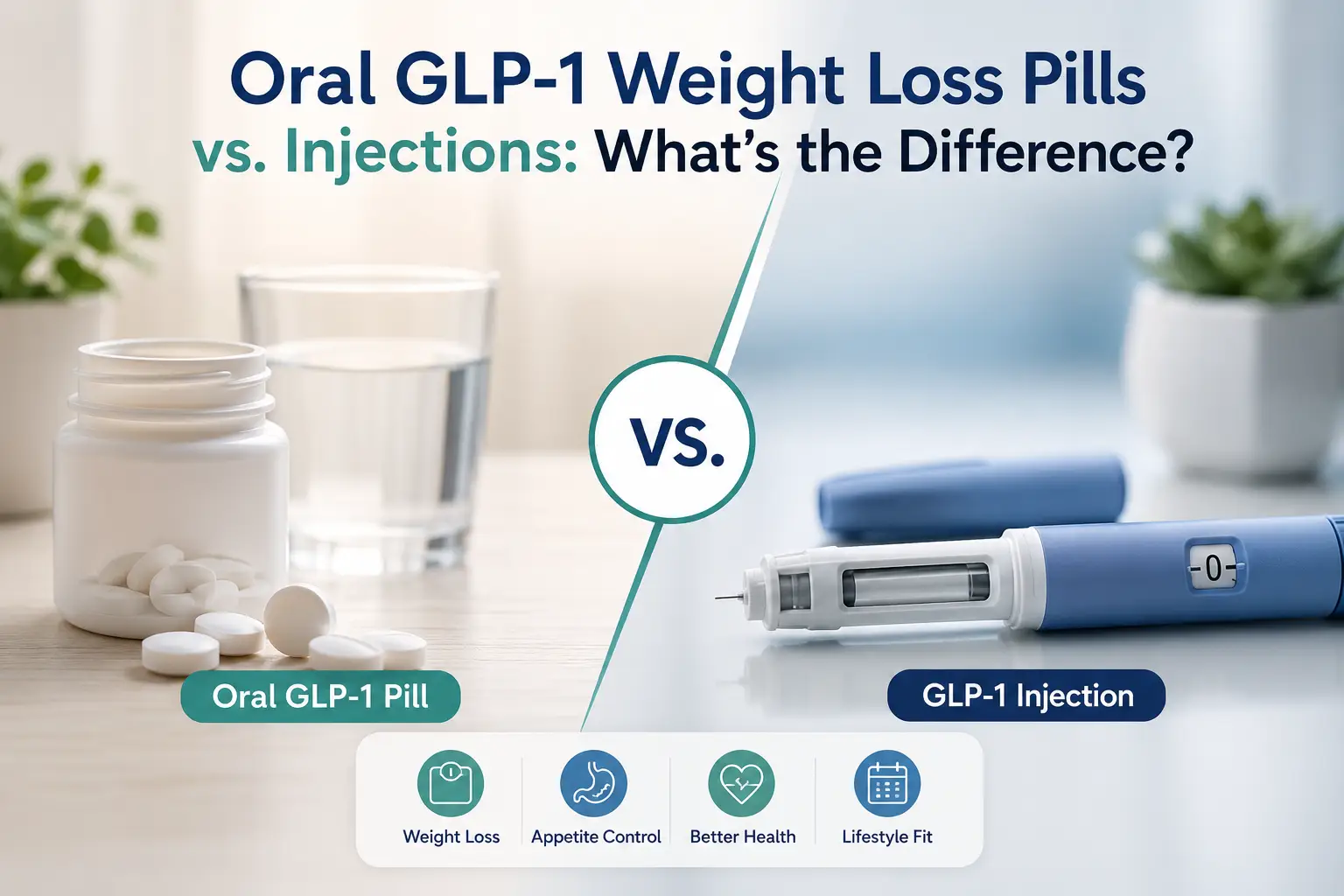
GLP-1 medications have become one of the most talked-about tools in medically supervised weight management. More patients and providers are turning to them as part of a comprehensive approach to weight loss—one that combines medication with changes in nutrition and physical activity. GLP-1 medications work by helping regulate appetite, increasing feelings of fullness, and supporting blood sugar control, all of which can contribute to meaningful weight reduction over time.
With both oral and injectable forms now FDA-approved, a common question is emerging: Is a GLP-1 pill better than an injection? The short answer is that there is no universal winner. The right option depends on factors like medication availability, dosing requirements, your medical history, how well you tolerate the medication, and personal preference. This guide breaks down the key differences so you can have a more informed conversation with your provider.
What Are GLP-1 Medications?
How GLP-1 medications work
GLP-1 stands for glucagon-like peptide-1, a hormone your body naturally produces after eating. GLP-1 medications mimic this hormone to produce several effects that support weight management.
First, they help regulate appetite by signaling to the brain that you’re full. This reduces overall food intake without requiring you to rely solely on willpower. Second, they slow gastric emptying—meaning food moves through your stomach more slowly, which helps you feel satisfied for longer after meals. Third, they help regulate blood sugar by stimulating insulin release and reducing glucagon levels.
Together, these effects make GLP-1 medications a clinically meaningful tool for people managing excess weight alongside other health conditions.
Why GLP-1 medications are used for weight management
Certain GLP-1-based medications are FDA-approved for chronic weight management in adults with obesity or overweight with at least one weight-related condition. It’s important to note that these medications are most effective as part of a broader plan—one that includes nutritional support, physical activity, and ongoing medical supervision. Medication alone is rarely a complete solution.
Oral GLP-1 Pill vs. Injection: What’s the Main Difference?
Before choosing between the two formats, it helps to understand what sets them apart in practice. The differences go beyond simply swallowing a tablet versus receiving an injection—they affect absorption, routine, and how you fit treatment into daily life.
1. How they are taken
Oral GLP-1 pills are taken by mouth according to each medication’s specific administration instructions. They may appeal to people who strongly prefer tablets over needles or who already take other daily oral medications. That said, dosing instructions can vary significantly between medications, and some require specific timing relative to food and water intake.
GLP-1 injections are administered subcutaneously—meaning under the skin, typically in the abdomen, thigh, or upper arm. Some injectable GLP-1 medications are taken just once per week, which reduces the number of days you need to think about your medication. For example, current FDA labeling describes Wegovy injection as a once-weekly treatment, while oral Wegovy tablets are taken on a daily schedule.
2. Absorption and how the medication is delivered
Oral and injectable GLP-1 medications are absorbed differently by the body. Injections bypass the digestive system during initial administration and are absorbed directly through subcutaneous tissue. Oral medications, on the other hand, must pass through the gastrointestinal system before entering the bloodstream. This difference in absorption pathway is one reason why oral medications often have specific instructions around food, water, and timing.
Neither route is automatically more effective for everyone—effectiveness depends on the specific medication, the dose, and how consistently it’s taken.
3. Dosing schedule and routine
Daily oral dosing versus once-weekly injections represents one of the most practical differences between formats. People who travel frequently, have unpredictable schedules, or already manage multiple medications may find one format significantly easier to maintain than the other. Adherence—consistently taking medication as prescribed—plays a major role in outcomes, so the format that fits your lifestyle best often matters more than the format that seems simpler on paper.
Oral GLP-1 Pills vs. Injections: Side-by-Side Comparison
| Factor | Oral GLP-1 Pills | GLP-1 Injections |
| Administration | Taken by mouth | Subcutaneous injection |
| Frequency | Depends on medication; some are daily | Often weekly, depending on medication |
| Needle required | No | Yes |
| Convenience | May suit people who prefer tablets | May suit people who prefer less frequent dosing |
| Dosing instructions | Can involve specific timing/food instructions | Usually less dependent on meal timing |
| Absorption | Through digestive system | Directly administered under the skin |
| Side effects | Can include gastrointestinal effects | Can also cause gastrointestinal effects |
| Medical supervision | Recommended | Recommended |
Important note: Neither format is universally better. Specific dosing, indications, and contraindications depend on the individual medication—not just whether it comes in pill or injection form.
Are Oral GLP-1 Pills as Effective as Injections for Weight Loss?
This is one of the most important questions surrounding the oral GLP-1 pill vs. injection comparison. The honest answer is that effectiveness cannot be determined by administration format alone—it depends on the specific medication, the approved dose, and the clinical evidence supporting it.
Rather than comparing all oral GLP-1 options against all injectable options as two monolithic categories, the more useful approach is to look at the clinical trial evidence for each individual medication. What weight loss outcomes did the trials show? What were the side effects? And what population was studied?
The FDA approval of Wegovy in both tablet and injection form provides a particularly relevant example, since the same active ingredient (semaglutide) is now available in both formats, each with its own dosing protocol and clinical data. Patients evaluating these options should consider expected benefits, potential side effects, dosing requirements, and their own history with weight-loss treatments—not simply choose based on how the medication is administered.
Benefits of Oral GLP-1 Weight Loss Medications
For the right patient, oral GLP-1 medications offer several potential advantages:
- No needles required, which can be a meaningful factor for patients with needle anxiety
- Easy to integrate into an existing daily pill routine
- Expanding choices as newer oral options become available
- Familiar format for patients accustomed to managing conditions with daily oral medications
Potential considerations include: specific administration requirements (some oral GLP-1 medications must be taken with limited water and without food), daily dosing that may feel burdensome for some, gastrointestinal side effects, and the fact that not every oral GLP-1 medication is appropriate for every patient.
Benefits of Injectable GLP-1 Weight Loss Medications
Injectable GLP-1 medications also bring meaningful advantages to the table:
- Infrequent dosing—many injectable options require only once-weekly administration
- Established clinical track record in weight management
- Less daily planning around meals and timing compared to some oral formulations
- Consistent adherence may be easier for patients who prefer a set weekly routine
Potential considerations include: the need to be comfortable with self-injection, the possibility of injection-site reactions, gastrointestinal side effects, and medication-specific warnings that vary by product. FDA labeling for Zepbound (tirzepatide), for example, identifies specific gastrointestinal adverse reactions and contraindications—a reminder that every medication choice should be individualized based on medical history and provider assessment.
Oral GLP-1 Pills vs. Injections: Which Is Better for You?
The answer genuinely depends on your individual profile. Your provider will consider:
- Your weight-loss goals and current health conditions
- Other medications you take and any potential interactions
- Your previous experience with weight-loss medications
- Whether you are comfortable with self-injection
- Your ability to follow daily dosing instructions consistently
- Whether you prefer daily or weekly treatment
- Your tolerance for potential side effects
- Insurance coverage and medication availability
Why medical supervision matters
GLP-1 medications are prescription treatments. A qualified provider is essential for determining whether medication is appropriate for you, selecting the right product and dose, reviewing contraindications, and monitoring your progress. Patients should not switch between oral and injectable medications—or between different GLP-1 products—without medical guidance.
It’s also worth noting that the FDA has warned consumers about risks associated with unapproved compounded GLP-1 products. To ensure safety and appropriate dosing, GLP-1 medications should only be obtained through legitimate medical and pharmacy channels with a valid prescription.
What Side Effects Can Oral and Injectable GLP-1 Medications Cause?
Both formats share a similar potential side-effect profile, largely related to the gastrointestinal system. Common effects may include:
- Nausea
- Vomiting
- Diarrhea
- Constipation
- Abdominal discomfort
- Reduced appetite
The frequency and intensity of these effects can vary depending on the specific medication, the dose, and how it’s titrated over time.
When to contact your healthcare provider
Severe or persistent symptoms should always be discussed with your healthcare professional. Before starting any GLP-1 medication, review the medication-specific patient information and prescribing guidance with your provider to understand what to watch for.
How to Choose Between an Oral GLP-1 Pill and an Injection
If you’re unsure which format might suit you, consider the following framework as a starting point for your provider conversation:
An oral option may be worth discussing if you:
- Strongly prefer taking pills
- Want to avoid needles entirely
- Can reliably follow daily medication instructions, including any timing or dietary requirements
An injectable option may be worth discussing if you:
- Prefer once-weekly rather than daily dosing
- Are comfortable with self-injection
- Want a format with an established track record in injectable weight management
Ultimately, the goal is not to pick a pill over a shot—or vice versa. The goal is finding the right, sustainable, medically appropriate weight-management strategy for your body, your lifestyle, and your long-term health.
FAQs
Ans: – Neither format is universally better. The best choice depends on your medical history, lifestyle, needle comfort, dosing preferences, and which specific medications are appropriate for you. A healthcare provider can help determine the most suitable option based on your individual situation.
Ans: – Effectiveness depends on the specific medication and its approved dosing—not simply whether it’s a pill or injection. Rather than comparing all oral and injectable GLP-1 options as broad categories, look at the clinical evidence for each individual medication. Discuss expected outcomes and FDA-approved indications with your provider.
Ans: – Both oral and injectable GLP-1 medications can cause similar gastrointestinal side effects, including nausea, vomiting, diarrhea, and constipation. The specific side-effect profile varies by medication, dose, and the individual patient.
Ans: – “Easier” is subjective. Oral medications eliminate needles but may require specific daily administration instructions. Injections involve a needle, but some are only needed once per week. The format that’s easier in practice depends largely on your routine and preferences.
Ans: – You should never switch between GLP-1 medications—or administration formats—without guidance from your healthcare provider. Dosing, titration schedules, and contraindications differ between products, and unsupervised switching can affect safety and outcomes.