
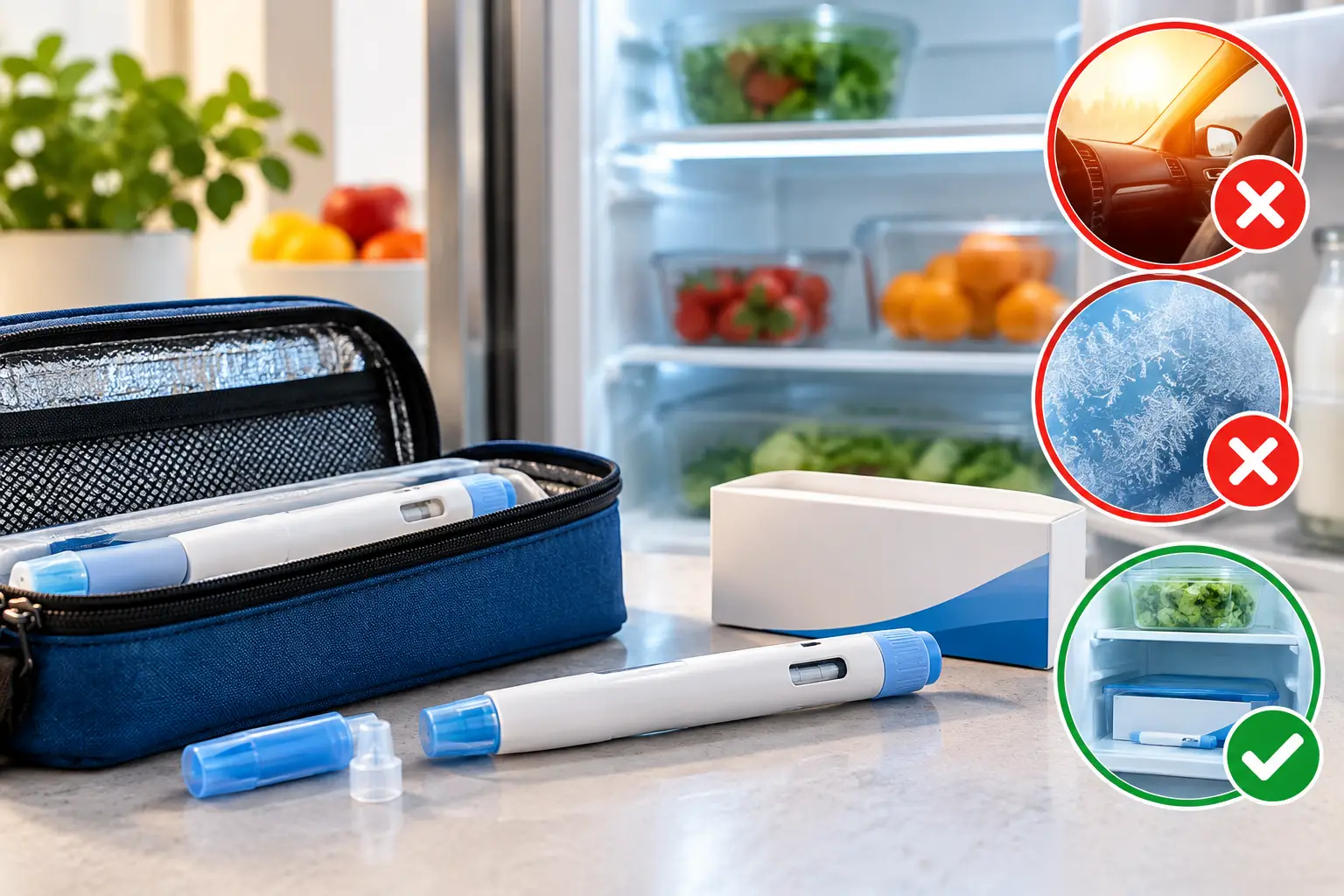
Proper medication storage is a critical, yet often overlooked, part of safe weight loss treatment. Injectable medications like semaglutide and other GLP-1 medications are sensitive to temperature, and improper handling can affect their quality and effectiveness.
This matters even more if you live in Phoenix, where summer temperatures can turn a parked car or sun-exposed countertop into a storage hazard within minutes. Whether you’re new to semaglutide or simply want to double-check your routine, understanding how to store semaglutide correctly can help protect your investment in your health.
Every medication is different, so patients should always follow the specific storage instructions provided with their prescription. This guide offers general information to help you understand what to watch for, but it doesn’t replace guidance from your prescribing provider or pharmacist.
Why Proper Storage Matters for Weight Loss Injections
Injectable medications are formulated to remain stable within specific temperature ranges. Several factors can compromise them, including:
- Excessive heat
- Freezing temperatures
- Direct sunlight
- Improper refrigeration
- Frequent temperature fluctuations
When these medications are exposed to conditions outside their recommended range, their quality can be affected. The FDA notes that injectable GLP-1 medications have specific refrigeration requirements outlined in their product labeling, and the agency has warned about quality concerns when certain injectable GLP-1 products arrive warm (U.S. Food and Drug Administration). This is one of the reasons storage shouldn’t be treated as an afterthought.
How to Store Semaglutide Properly
Getting semaglutide storage right starts with understanding your specific product’s requirements. The guidance below reflects current FDA labeling, but you should always confirm details against your own prescription.
Should Semaglutide Be Refrigerated?
Many semaglutide injections are designed to be stored refrigerated before use. For example, current FDA labeling for Ozempic states that unused pens should be refrigerated at 36°F–46°F (2°C–8°C) (FDA Access Data). Refrigeration helps preserve the medication’s stability until you’re ready to begin using a pen.
Always rely on the instructions that come with your specific prescription rather than general assumptions, since storage requirements can differ between manufacturers and formulations.
Can Semaglutide Be Stored at Room Temperature?
Some semaglutide products allow for storage at controlled room temperature once they’re in use. As an example, current Ozempic labeling permits a used multi-dose pen to be stored at 59°F–86°F for up to 56 days (FDA Access Data).
This isn’t a universal rule, though. The allowable temperature range and time period vary depending on the product and its specific presentation, so check your medication’s labeling or ask your pharmacist before assuming room temperature storage is appropriate for your prescription.
Can You Freeze Semaglutide?
No. Semaglutide should never be frozen, and it shouldn’t be placed directly next to a freezer compartment or a refrigerator’s cooling element, since this can bring the medication dangerously close to freezing temperatures.
Current FDA labeling states that Ozempic and Wegovy should not be used if they’ve been frozen (FDA Access Data). If you suspect your medication has frozen, don’t use it without first consulting your prescribing clinician or pharmacist.
How to Store Other Weight Loss Injections
Storage requirements differ across weight loss medications, so it’s important not to apply a one-size-fits-all approach. Here’s a general overview:
| Medication | Typical Storage Consideration |
| Semaglutide | Follow the specific product label; many formulations require refrigeration |
| Tirzepatide | Follow the specific product/manufacturer storage instructions |
| Other injectable medications | Follow the medication’s individual prescribing information |
Because requirements can differ significantly between products, always default to the instructions that accompany your specific prescription.
How Phoenix Heat Can Affect Your Weight Loss Medication
Phoenix summers regularly bring extreme temperatures, and this creates unique challenges for anyone managing weight loss injections locally. A few practical precautions can make a significant difference:
- Never leave injectable medication in a parked car, even briefly.
- Avoid placing medication near windows or in direct sunlight.
- Don’t store medication in a garage, outdoor shed, or other space exposed to extreme heat.
- Keep medication in a consistently temperature-controlled environment.
- Plan ahead when running errands or traveling around the Phoenix area so your medication isn’t left in a hot vehicle or bag for extended periods.
Whether you’re managing semaglutide storage in Phoenix or another GLP-1 medication, the valley’s heat makes a little extra planning worthwhile.
Where Should You Keep Semaglutide in the Refrigerator?
Once you understand that refrigeration is required, placement within the fridge matters too. Consider these tips:
- Keep refrigerated medication in its original carton when instructed to do so.
- Avoid placing it directly against the refrigerator’s back wall or cooling element, where temperatures can dip too low.
- Choose a consistent spot inside the refrigerator to avoid temperature swings from frequent door opening.
- Don’t store medication in a location where it could accidentally freeze.
- Keep medication out of reach of children and anyone who shouldn’t access it.
Current FDA labeling instructs patients to keep Ozempic in its original carton until administration and to protect it from excessive heat and sunlight (FDA Access Data).
What to Do If Your Semaglutide Gets Too Hot
Even with careful planning, accidents happen. Maybe the medication was left in a hot car, your refrigerator stopped working, a delivery arrived warm, or you suspect it may have frozen.
Don’t assume medication is safe (or unsafe) to use based on appearance alone. Instead:
- Check the medication’s storage instructions.
- Note approximately how long and at what temperature it was exposed.
- Contact your prescribing provider or dispensing pharmacy.
- Follow their guidance before using the medication.
FDA guidance emphasizes following product-specific storage requirements whenever medication has been exposed to inappropriate temperatures (U.S. Food and Drug Administration). When in doubt, it’s always worth the phone call.
How to Store Weight Loss Injections While Traveling
Travel adds another layer of complexity to medication storage, particularly during Phoenix’s hottest months. Keep these points in mind for road trips, flights, and hotel stays:
- Use an appropriate insulated travel container when recommended by your pharmacist or provider.
- Avoid direct contact between the medication and frozen ice packs.
- Keep the medication within its labeled temperature range throughout your trip.
- Check airline and TSA requirements before flying with injectable medication.
Can You Leave Semaglutide in a Car?
No. Don’t leave temperature-sensitive medication in a parked vehicle, especially in Phoenix heat. Vehicle interiors can climb far hotter than the outdoor temperature within just a few minutes, even with the windows cracked.
Signs You Should Check Your Medication Before Injecting
Before administering a dose, consider whether your medication may have been compromised. Watch for situations such as:
- The medication was frozen.
- It was exposed to excessive heat.
- The packaging is damaged.
- The medication looks noticeably different from how the product instructions describe it.
- It was stored outside its recommended conditions for an unknown period.
Appearance alone isn’t a reliable way to judge medication safety. When any of these situations apply, check with your provider or pharmacist first.
Common Semaglutide Storage Mistakes to Avoid
- Leaving semaglutide in a hot car
- Freezing the medication
- Storing it directly beside the freezer or cooling element
- Leaving it in direct sunlight
- Ignoring the manufacturer’s storage instructions
- Assuming every GLP-1 medication has identical storage requirements
- Using medication after an unknown temperature excursion without checking with a healthcare professional
Quick Semaglutide Storage Checklist
Before storing:
- ☐ Read the medication label
- ☐ Confirm the required temperature
- ☐ Check the expiration date
- ☐ Keep it protected from excessive heat and light
- ☐ Keep it away from children
Before injecting:
- ☐ Confirm it wasn’t frozen
- ☐ Check whether it experienced excessive heat
- ☐ Follow the medication-specific instructions
- ☐ Contact your provider or pharmacist if storage conditions were exceeded
About Laveen Medical Weight Loss
Laveen Medical Weight Loss provides personalized weight management support for patients in Phoenix and the surrounding area. The practice focuses on helping patients develop sustainable weight-loss strategies that may include medical weight management and prescription medications when clinically appropriate.
Patients considering semaglutide or other weight loss injections can work with a qualified healthcare professional to determine whether a particular treatment is appropriate for their goals and health needs. The team can also provide guidance on proper medication use, including following prescription instructions and understanding important considerations such as storage, dosing, and potential side effects. Because medication requirements can vary between products, patients should follow the specific instructions provided by their healthcare professional and medication manufacturer. Considering medical weight loss in Phoenix? Contact Laveen Medical Weight Loss to discuss your weight-loss goals and learn whether a medically supervised approach may be appropriate for you.
FAQs
Ans: – Semaglutide should be stored according to the instructions provided with your specific prescription, which typically means refrigerating unused pens and following product-specific guidance once the pen is in use.
Ans: – Many semaglutide formulations require refrigeration before use. For example, current FDA labeling for Ozempic calls for unused pens to be stored at 36°F–46°F (FDA Access Data). Always check your specific product’s labeling.
Ans: – Some semaglutide pens can be kept at controlled room temperature for a limited time once in use. Ozempic labeling, for instance, allows a used pen to be stored at 59°F–86°F for up to 56 days (FDA Access Data). This varies by product, so confirm with your pharmacist.
Ans: – If your medication is exposed to excessive heat, don’t assume it’s safe to use. Note the exposure time and temperature if possible, then contact your prescribing provider or pharmacist for guidance before injecting.
Ans: – No. Semaglutide should never be frozen, and current FDA labeling specifically states that Ozempic and Wegovy shouldn’t be used if they’ve been frozen (FDA Access Data). If you suspect freezing occurred, check with your provider before use.