
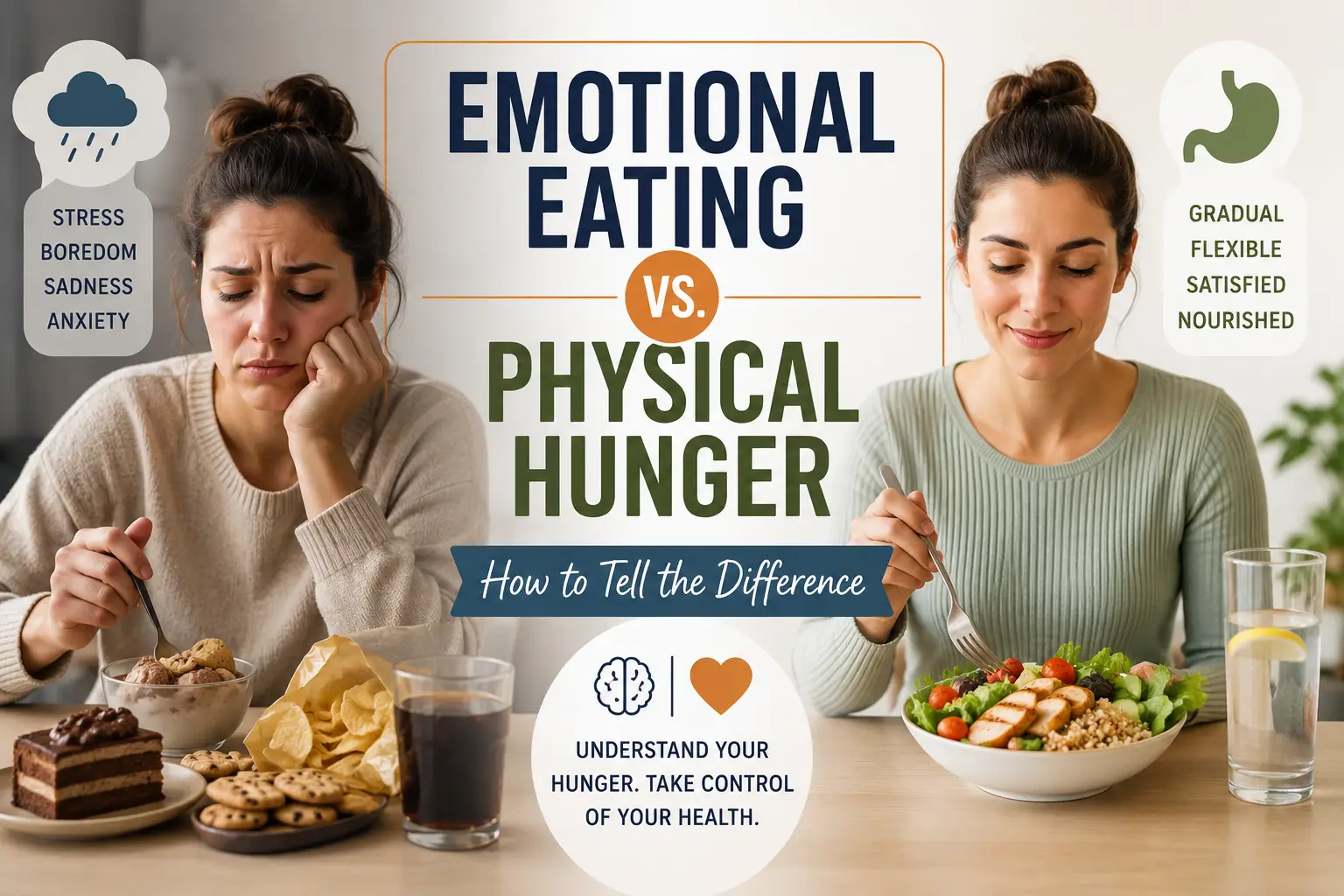
You sit down after a long day, and before you know it, you’re halfway through a bag of chips—despite having eaten dinner an hour ago. Sound familiar? For many people, eating isn’t always about hunger. Stress, boredom, sadness, anxiety, and even habitual cues like watching TV can all prompt a trip to the kitchen.
Understanding the difference between emotional eating vs physical hunger is a crucial step toward building healthier eating habits and making weight management feel less like a constant battle. Once you can reliably tell the two apart, food choices become more intentional—and a lot less frustrating. If you find yourself repeatedly struggling to manage your eating patterns, speaking with a qualified healthcare professional can provide additional support and guidance.
What Is Physical Hunger?
Physical hunger is the body’s biological signal that it needs energy or nutrients to function. It’s a physiological process—driven by hormones like ghrelin—that prompts you to seek out food. Unlike emotional hunger, physical hunger builds over time and responds to a wide variety of foods.
Common Signs of Physical Hunger
- A gradual onset rather than a sudden urge
- Stomach growling or an empty, hollow feeling in the abdomen
- Low energy or fatigue
- Difficulty concentrating or feeling irritable
- Hunger arising several hours after your last meal
- A sense of satisfaction once you’ve eaten an appropriate amount
Physical Hunger Is Usually Flexible
One of the clearest markers of physical hunger is its flexibility. When your body genuinely needs fuel, a bowl of oatmeal, a piece of fruit, or a balanced meal will all feel like reasonable options. Physical hunger builds gradually rather than hitting suddenly, and it doesn’t fixate on one specific food. Wanting pizza specifically, on the other hand, is more likely to be appetite—shaped by cravings, habits, or emotions—rather than a true physiological need.
What Is Emotional Eating?
Emotional eating is the act of eating in response to emotions or psychological triggers rather than a physical need for food. It’s a coping mechanism—often an unconscious one—that uses food to manage uncomfortable feelings or fill emotional voids.
Common Emotional Eating Triggers
Emotional eating can be sparked by a wide range of experiences, including:
- Stress or anxiety after a difficult day at work
- Sadness or loneliness, especially during periods of social isolation
- Boredom, when food provides stimulation rather than sustenance
- Frustration following conflict or unmet expectations
- Celebrations or social situations where eating becomes tied to reward
- Habitual patterns, like snacking while watching TV or scrolling through your phone
Signs You May Be Emotionally Eating
- A sudden, urgent desire to eat
- Craving a specific comfort food—often something sweet, salty, or high in fat
- Eating despite having had a full meal recently
- Eating quickly or mindlessly, barely tasting the food
- Feeling guilty, ashamed, or uncomfortable after eating
- Using food as a way to avoid or numb an uncomfortable emotion
It’s worth noting that occasional emotional eating is common and doesn’t automatically indicate a serious problem. Most people reach for comfort food from time to time. The concern arises when it becomes the primary way to handle difficult emotions on a regular basis.
Emotional Eating vs. Physical Hunger: Key Differences
The table below highlights the most important distinctions between the two:
| Physical Hunger | Emotional Hunger |
| Develops gradually | Often appears suddenly |
| Can be satisfied by many foods | Often involves a specific craving |
| Happens several hours after eating | Can happen soon after a meal |
| Stops when you’re comfortably full | May continue despite fullness |
| Focuses on satisfying the body’s needs | Often focuses on comfort or distraction |
| Usually doesn’t cause guilt | May be followed by regret or guilt |
Ask Yourself These Questions Before Eating
Pausing to reflect before you eat can make a significant difference. Try running through these questions:
- “When did I last eat?”
- “Do I feel any physical signs of hunger right now?”
- “Would I eat a balanced, nutritious meal right now?”
- “Am I craving one particular food?”
- “What emotion am I experiencing at this moment?”
- “Am I eating because I’m hungry—or because I want to change how I feel?”
If you answer “yes” to the last question more often than not, emotional eating may be playing a bigger role in your diet than you realize.
Why Is It Sometimes Difficult to Recognize Hunger?
Hunger cues aren’t always easy to read, and several factors can cloud your ability to interpret them accurately:
- Chronic dieting or restrictive eating can disrupt normal hunger signals over time
- Irregular meal schedules make it harder to predict when genuine hunger will arise
- Stress and poor sleep both affect the hormones that regulate appetite
- Habitual snacking or distracted eating can override natural fullness cues
- Highly palatable foods are engineered to encourage eating beyond physical need
- Environmental and emotional triggers can mimic or override biological hunger
It also helps to understand that hunger and appetite are not the same thing. Hunger is primarily a physiological need triggered by the body’s energy requirements. Appetite, however, is influenced by emotions, habits, sensory cues, and even the sight or smell of food—regardless of whether the body actually needs fuel.
How to Stop and Check Before You Eat
Building awareness around your eating behavior takes practice, but a few simple strategies can help.
Try the “Pause and Check” Method
Rather than eating on autopilot, build in a brief pause before reaching for food:
- Stop and take a slow breath before opening the fridge or pantry
- Identify what you’re feeling emotionally in that moment
- Rate your physical hunger on a scale of 1 to 10
- Consider when you last ate and whether enough time has passed
- Ask yourself whether food—or something else entirely—would actually address what you need
Keep a Simple Food and Emotion Journal
A food and emotion journal doesn’t need to be complex. After each meal or snack, jot down:
- The time you ate
- Your hunger level before eating (1–10)
- What you ate
- Your emotional state at the time
- What happened in the hour before eating
The goal here is awareness, not self-criticism. Over time, patterns tend to emerge—specific emotions, times of day, or situations that consistently trigger eating. Recognizing those patterns is often the first step toward changing them.
Healthy Ways to Manage Emotional Eating
The goal isn’t to eliminate emotional eating entirely—it’s to build a broader toolkit for coping with difficult feelings. When you feel an emotional urge to eat, consider trying one of the following:
- Taking a short walk to shift your physical and mental state
- Drinking a glass of water and waiting 10 minutes
- Practicing slow, deep breathing or a brief mindfulness exercise
- Calling or texting a friend
- Writing in a journal about what you’re feeling
- Prioritizing adequate sleep, which plays a direct role in appetite regulation
- Creating structured meal times to reduce impulsive eating
- Eating slowly and without screens to reconnect with physical hunger and fullness cues
- Finding non-food activities that bring comfort—reading, stretching, music, or time outdoors
Each small habit builds on the last. Over time, these practices can shift the default response from reaching for food to reaching for a strategy that actually addresses the underlying trigger.
When Emotional Eating May Affect Weight Loss
For people working toward weight management goals, frequent emotional eating can make calorie intake difficult to track and regulate. Repeated cycles of restriction, intense cravings, overeating, and guilt can make progress feel inconsistent—and exhausting.
This isn’t a willpower problem. Weight management involves a complex interaction of factors: appetite-regulating hormones, sleep quality, stress levels, metabolism, habits, and in some cases, underlying medical conditions. Framing emotional eating as a personal failing misses the bigger picture and often makes the cycle worse.
People who struggle repeatedly with overeating—particularly when emotional triggers are involved—may benefit from discussing their concerns with a healthcare professional who can assess the full picture.
How Medical Weight Loss Can Support Your Goals
At Laveen Medical Weight Loss, weight management is approached as the individualized, multifaceted process it truly is. Rather than offering a one-size-fits-all plan, the clinic assesses each patient’s unique health history, lifestyle, and challenges to build a personalized path forward.
Support may include lifestyle and nutrition guidance, behavioral strategies, ongoing monitoring, and appropriate medical treatment where indicated. For those in the Phoenix and Laveen area who feel like they’ve tried everything without lasting results, speaking with the clinic about your individual goals is a practical next step—not a last resort.
Build Awareness, One Meal at a Time
Distinguishing between emotional eating vs physical hunger is a skill—and like any skill, it gets sharper with practice. The cues won’t always be obvious at first, but paying attention to your body, your emotions, and the patterns that connect them can gradually change the way you relate to food. Hunger is just one piece of the puzzle. Sleep, stress, habits, and emotional health all shape eating behavior in ways that willpower alone can’t fix. If you’re ready to take a more informed, supported approach to your weight and wellbeing, Laveen Medical Weight Loss is here to help. Reach out to discuss your goals and find out what a personalized plan could look like for you.
FAQs
Ans: – The key differences are timing and flexibility. Physical hunger builds gradually over several hours and can be satisfied by a variety of foods. Emotional hunger tends to come on suddenly, often craves a specific comfort food, and may persist even after eating. Asking “Would I eat a balanced meal right now?” is a useful gut-check.
Ans: – Yes, it can. Emotional hunger can produce physical sensations—stomach tension, restlessness, or a strong urge to eat—that closely resemble physical hunger. This is one reason it can be difficult to distinguish between the two, especially during periods of high stress or poor sleep.
Ans: – Stress triggers the release of cortisol, a hormone that increases appetite and often drives cravings for high-fat, high-sugar, or high-salt foods. These foods activate the brain’s reward system, which can temporarily reduce feelings of stress—making the pattern reinforcing over time.
Ans: – Not necessarily. Eating for enjoyment, connection, or comfort is a normal part of human experience. The concern arises when emotional eating becomes the primary or only way to cope with difficult emotions, particularly if it leads to guilt, physical discomfort, or difficulty reaching health goals.
Ans: – There’s no single solution, but building awareness is the starting point. Practical strategies include pausing before eating, keeping a food and emotion journal, developing non-food coping habits, and improving sleep and stress management. For persistent challenges, working with a healthcare professional or registered dietitian can provide structured, personalized support.