
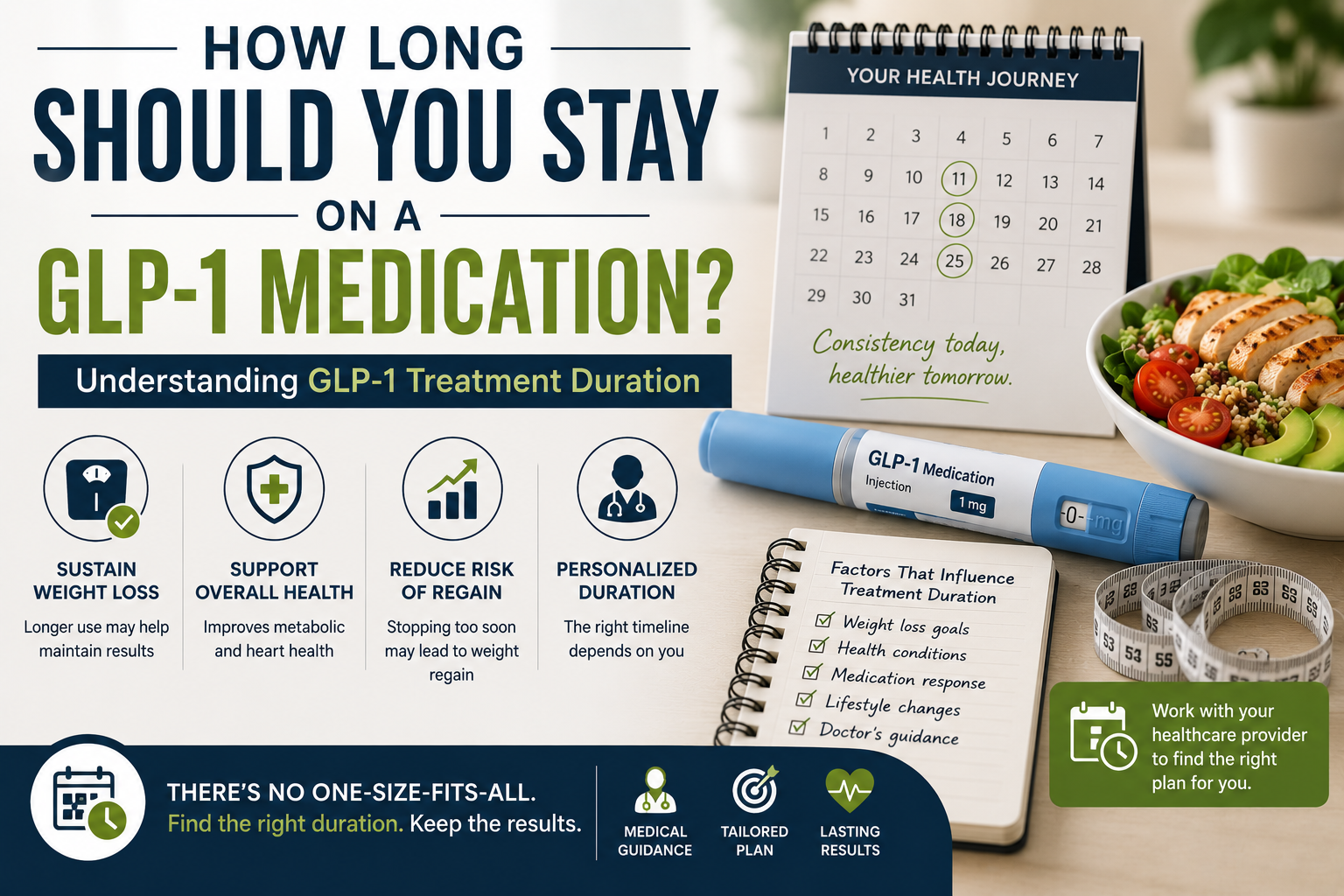
GLP-1 medications like semaglutide have changed the landscape of medical weight loss, helping thousands of people reach goals that once felt out of reach. As these treatments grow in popularity, one question comes up again and again: how long should treatment actually last?
The honest answer is that GLP-1 treatment duration looks different for everyone. Your medical history, weight loss goals, lifestyle habits, and your physician’s guidance all play a role in shaping the right timeline. Some people use these medications for several months, while others benefit from longer-term care.
This guide breaks down how GLP-1 medications work, the factors that influence how long you stay on them, and what the latest research says about long-term use. By the end, you’ll have a clearer picture of what to expect—and why personalized medical support matters every step of the way.
Understanding How GLP-1 Medications Work
GLP-1 receptor agonists mimic a natural hormone your body produces after eating. This hormone, glucagon-like peptide-1, plays a key role in appetite and blood sugar control.
When you take a GLP-1 medication, it works in several ways:
- Reduces appetite by signaling fullness to the brain, so you eat less without constant hunger.
- Slows gastric emptying, which keeps you feeling satisfied longer after meals.
- Improves blood sugar regulation, making it especially helpful for people with diabetes or prediabetes.
- Supports sustainable weight loss by making healthier eating habits easier to maintain.
These medications are not a quick fix. They work best as part of a comprehensive weight management program that includes nutrition, exercise, and ongoing medical guidance. The medication makes change easier, but lasting results come from combining it with healthier daily habits.
Is There a Standard GLP-1 Treatment Duration?
There’s no universal timeline for GLP-1 treatment. What works for one person may not be right for another, which is why a one-size-fits-all approach simply doesn’t apply.
Several factors shape how long treatment lasts, including:
- Your starting weight
- Your BMI
- Existing medical conditions
- Progress toward your weight loss goals
- How well you tolerate the medication
Because of these variables, treatment plans should always be individualized. A skilled medical provider will assess your unique situation and adjust your plan as your needs change over time.
Factors That Determine How Long You Stay on GLP-1 Medication
Several elements influence your treatment timeline. Understanding them can help you set realistic expectations and work more effectively with your care team.
Weight Loss Progress
Your rate of weight loss is one of the biggest factors. Healthy, gradual weight loss is the goal—not rapid drops that are hard to maintain. Many people also hit plateaus along the way, where progress slows or stalls. Your physician will monitor these changes closely and adjust your plan as needed to keep you moving toward your goals.
Overall Health Conditions
Your medical history matters. People managing conditions like type 2 diabetes, prediabetes, metabolic syndrome, or high blood pressure may benefit from longer treatment, since GLP-1 medications can support both weight loss and better metabolic health. In these cases, treatment duration is more than the number on the scale.
Lifestyle Habits
The habits you build during treatment have a big impact on your timeline. Improvements in nutrition, consistent exercise, quality sleep, and effective stress management all support better outcomes. The stronger these habits become, the more confidently you and your provider can plan for the future.
Side Effects and Medication Tolerance
Some people experience mild digestive symptoms, such as nausea or bloating, especially early on. These often improve with time or with a dose adjustment. Regular follow-up appointments allow your provider to fine-tune your dose, manage any side effects, and keep your treatment comfortable and effective.
Can You Stop Taking GLP-1 Medication After Reaching Your Goal Weight?
Reaching your goal weight is a major milestone—but it doesn’t always mean treatment ends right away. What happens next depends on your individual situation and how your body responds.
Stopping suddenly can increase the likelihood of weight regain, since the appetite-regulating effects of the medication fade once it’s out of your system. That’s why transition planning is so important. Rather than quitting cold turkey, many people work with their provider to gradually adjust their approach while reinforcing healthy habits.
Long-term semaglutide use may be appropriate for some patients, particularly those who need ongoing support to maintain their results. For others, a carefully managed transition with strong lifestyle maintenance strategies can help preserve progress. The key is having a plan in place before any changes are made.
What Does Research Say About Long-Term Semaglutide Use?
Current clinical findings suggest that long-term semaglutide use can offer meaningful benefits for many patients. Research points to several advantages of continued treatment under medical supervision:
- Better weight maintenance, with patients more likely to keep weight off while on treatment
- Continued appetite regulation, making healthy eating easier to sustain
- Improved metabolic health, including benefits for blood sugar and cardiovascular markers
These benefits highlight why ongoing medical supervision is essential. Long-term use should always be guided by a healthcare provider who can monitor your progress, manage any risks, and adjust your treatment as your body and goals evolve.
Signs It May Be Time to Reevaluate Treatment
Treatment plans aren’t set in stone. There are several situations where your healthcare provider may decide to adjust or pause your GLP-1 medication:
- Your weight has stabilized and stayed steady over time
- You’ve made significant, lasting lifestyle improvements
- Side effects begin to outweigh the benefits
- An alternative medication becomes a better fit for your needs
- You’re planning a pregnancy or have other medical considerations
Open communication with your provider ensures these decisions are made at the right time, with your health and goals front of mind.
How Laveen Medical Weight Loss Personalizes GLP-1 Treatment
At Laveen Medical Weight Loss, we know that no two weight loss journeys are alike. That’s why we build treatment around you, not a generic template.
Our approach includes:
- Comprehensive medical evaluations to understand your full health picture
- Customized treatment timelines based on your goals and progress
- Ongoing progress monitoring to keep your plan on track
- Nutrition coaching to support healthier eating habits
- Lifestyle counseling that addresses sleep, stress, and activity
- Medication adjustments based on your results and tolerance
- Long-term success planning so your progress lasts well beyond treatment
This personalized care helps ensure your GLP-1 treatment duration matches your real needs—not a one-size-fits-all guess.
Tips for Maintaining Weight Loss After GLP-1 Therapy
Whether you stay on treatment long-term or transition off, these habits can help protect your progress:
- Eat protein-rich meals to support muscle and keep you full
- Add strength training a few times a week to maintain lean muscle
- Stay active daily, even with simple movement like walking
- Practice portion awareness to avoid creeping back into old habits
- Prioritize sleep hygiene, since poor sleep can affect appetite
- Stay hydrated throughout the day
- Manage stress with techniques that work for you
- Keep up with regular medical follow-ups to stay accountable and supported
Small, consistent habits make the biggest difference over time.
Your Path to Lasting Results Starts Here
There’s no single answer to the question of GLP-1 treatment duration. The right timeline depends on your body, your health, your goals, and the guidance of experienced medical professionals. What stays consistent is this: medication works best when paired with healthy lifestyle habits and ongoing support.
If you’re ready to find out what the right plan looks like for you, the team at Laveen Medical Weight Loss is here to help. Schedule a consultation today and take the first step toward sustainable, personalized weight loss.
FAQs
Ans: – There’s no fixed timeline. Most people stay on GLP-1 medication based on their starting weight, health conditions, progress, and how well they tolerate the treatment. Some use it for several months, while others benefit from longer-term care guided by their physician.
Ans: – For many patients, long-term semaglutide use is safe when managed by a healthcare provider. Research points to benefits like better weight maintenance and improved metabolic health, but ongoing medical supervision is essential to monitor progress and manage any risks.
Ans: – Stopping GLP-1 medication can increase the chance of weight regain, since its appetite-regulating effects fade once it leaves your system. A gradual transition plan and strong lifestyle habits can help you maintain your results.
Ans: – Reaching your goal weight doesn’t always mean stopping treatment right away. Some patients continue treatment to maintain results, while others transition off with a carefully managed plan. Your provider can help you decide what’s best.
Ans: – Regular follow-up appointments are important throughout treatment. These visits let your provider monitor your progress, adjust your dose, manage side effects, and decide when it may be time to reevaluate your plan.