
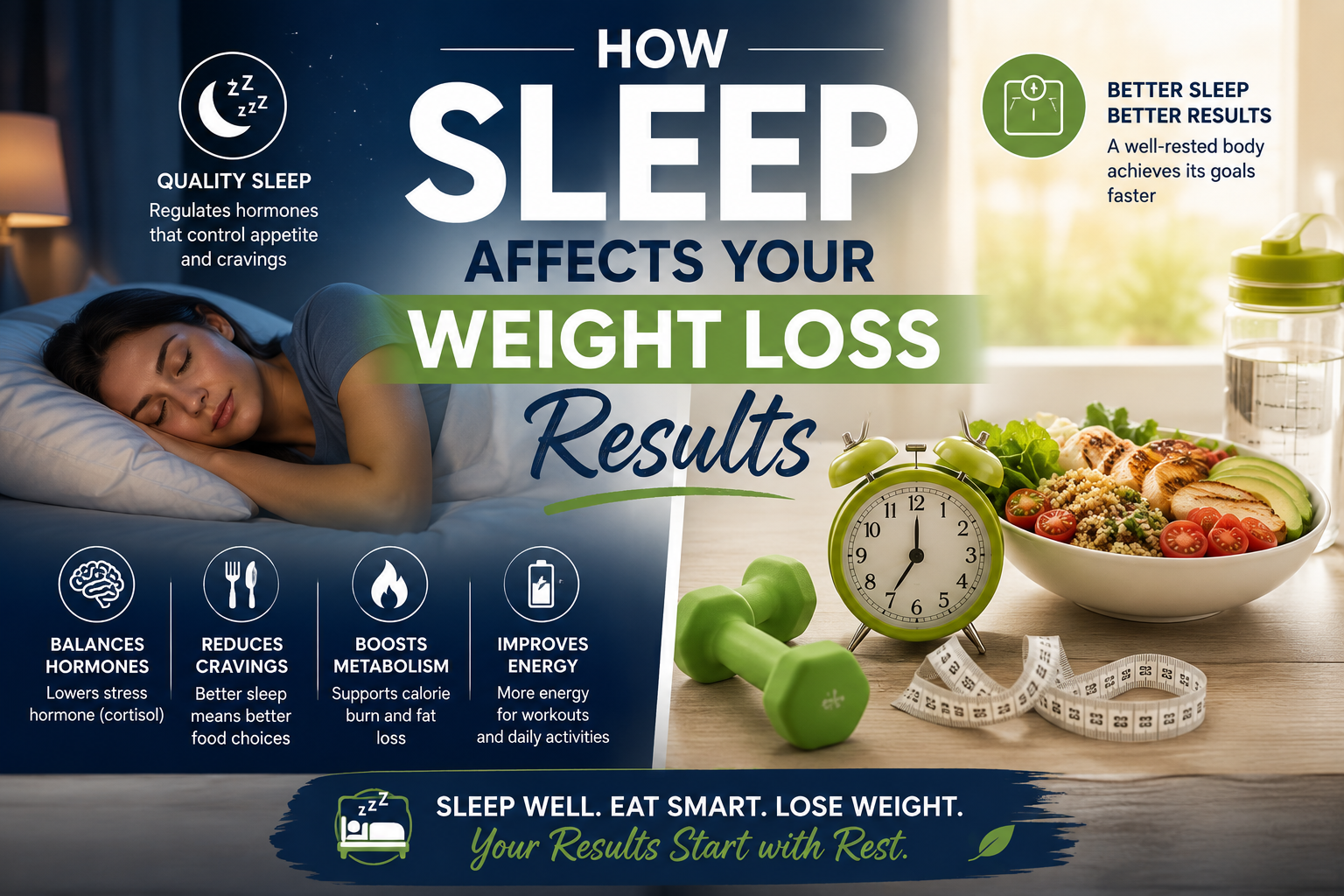
You’ve cleaned up your diet. You’re hitting the gym. So why won’t the scale budge? The answer might be hiding in your bedroom—not your kitchen or your workout routine.
Most weight loss advice focuses on two things: eat less and move more. While both matter, they leave out a powerful factor that quietly shapes your results every single night. Sleep influences the hormones that control hunger, the way your body stores fat, your energy for exercise, and how well your muscles recover.
In this post, you’ll learn exactly how sleep and weight loss are connected, the science behind it, and the simple habits you can use to sleep better and slim down. Lasting results come from treating sleep, nutrition, and lifestyle as one connected system—not separate boxes to check.
Why Sleep Matters More Than You Think for Weight Loss
Sleep is when your body does its most important repair work. While you rest, your system regulates hormones, restores energy, and rebuilds muscle tissue broken down during the day. Skip out on quality sleep, and you interrupt every one of these processes.
Your metabolism depends heavily on rest. During deep sleep, your body manages how it processes and stores energy from food. When sleep is cut short, metabolism slows, and your body becomes less efficient at turning food into fuel—and more likely to hold onto fat.
There’s also a direct link between sleep quality and fat burning. People who consistently sleep too little often find it harder to lose weight, even when their diet and exercise are on point. Research shows that dieters who sleep poorly lose more muscle and less fat than those who are well-rested. In short, you can do everything else right and still stall if sleep is missing from the equation.
The Science Behind Sleep and Weight Loss
The connection between rest and your waistline isn’t guesswork. It comes down to how sleep affects three key systems in your body.
Sleep Regulates Hunger Hormones
Two hormones regulate your appetite: ghrelin and leptin. Ghrelin tells your brain you’re hungry. Leptin tells your brain you’re full. Sleep keeps these two in balance.
When you don’t get enough sleep, ghrelin levels rise, and leptin levels drop. The result? You feel hungrier and less satisfied after eating. That’s why a single bad night can leave you raiding the pantry the next day, even if you’ve eaten plenty.
Cortisol and Stress Levels Increase
Poor sleep raises cortisol, your body’s main stress hormone. Elevated cortisol signals your body to store fat—especially around the midsection. It also makes stress eating far more likely.
When cortisol stays high, your cravings for quick comfort foods climb, and your willpower to resist them shrinks. This combination works directly against your weight loss goals.
Blood Sugar and Insulin Response
Sleep loss reduces insulin sensitivity, meaning your body struggles to manage blood sugar properly. When this happens, you crave sugary, high-carb foods more often. Unstable blood sugar leads to energy crashes, which trigger more eating and a greater risk of overeating throughout the day.
How Poor Sleep Can Slow Down Your Weight Loss Progress
Beyond the hormones, a lack of rest creates a chain of everyday effects that quietly sabotage your efforts.
Increased Cravings
Tired brains crave fast energy. That usually means sugar, processed foods, and late-night snacking. These choices add empty calories at the exact time your body needs them least.
Less Energy for Exercise
Fatigue saps your motivation. When you’re running on empty, workouts feel harder, last shorter, and burn fewer calories. Sometimes you skip the gym entirely—and consistency is what drives progress.
Slower Muscle Recovery
Your muscles rebuild during sleep. Without enough rest, recovery slows, your performance drops, and you burn fewer calories overall. Muscle tissue helps power your metabolism, so protecting it matters.
Emotional Eating
Sleep deprivation fuels mood swings and anxiety. When emotions run high, comfort eating often follows. Many people reach for food not out of hunger, but to soothe stress they’re too tired to manage.
Healthy Weight Loss Habits That Improve Sleep
The good news? Better sleep is within your control. These weight loss habits do double duty—they support both your rest and your results:
- Maintain a consistent sleep schedule. Go to bed and wake up at the same time every day, even on weekends.
- Avoid caffeine late in the day. Cut it off by early afternoon to protect your evening wind-down.
- Eat balanced evening meals. Pair protein, healthy fats, and fiber to keep blood sugar steady overnight.
- Stay physically active. Regular movement helps you fall asleep faster and sleep more deeply.
- Reduce screen time before bed. The blue light from phones and laptops disrupts your natural sleep signals.
- Keep the bedroom cool and dark. A comfortable, dim space tells your body it’s time to rest.
- Drink enough water during the day. Stay hydrated, but ease off fluids close to bedtime.
- Practice relaxation techniques before sleeping. Deep breathing, stretching, or reading can calm a busy mind.
Foods That Support Better Sleep and Weight Management
What you eat affects how you sleep. Some foods are especially good at supporting both rest and a healthy weight:
- Greek yogurt — high in protein and rich in calcium, which helps the brain use sleep-promoting compounds.
- Almonds — a source of magnesium that supports muscle relaxation and steady sleep.
- Kiwi — linked to better sleep quality thanks to its natural serotonin content.
- Tart cherries — one of the few natural sources of melatonin, the sleep hormone.
- Oats — provide slow-digesting carbs and a touch of natural melatonin.
- Turkey — packed with tryptophan, which helps your body produce sleep-supporting hormones.
- Bananas — contain magnesium and potassium that relax muscles.
- Herbal teas — caffeine-free options like chamomile help you wind down.
Choosing nutrient-dense foods like these supports better sleep quality while keeping calories in check—a win for sustainable weight loss.
Can Medical Weight Loss Help if Poor Sleep Is Affecting Results?
Sleep is only one piece of a larger puzzle. If you’re doing the right things and still struggling, it may be time for professional support.
A medical weight loss program looks at every factor working against you—not just one. These programs typically offer:
- Personalized nutrition built around your body and goals
- Lifestyle coaching to improve sleep, stress, and daily habits
- GLP-1 medications when appropriate and medically suitable
- Ongoing progress monitoring to keep you on track
If sleep struggles and stubborn weight have you stuck, expert guidance can help you find what’s actually holding you back.
Simple Daily Routine for Better Sleep and Weight Loss
Putting it all together doesn’t have to be complicated. Here’s a sample routine to follow:
Morning
- Wake up at the same time every day
- Get sunlight exposure soon after waking
- Eat a protein-rich breakfast
Afternoon
- Stay hydrated throughout the day
- Fit in exercise or movement
- Choose balanced, satisfying meals
Evening
- Keep dinner light
- Skip heavy late-night snacks
- Reduce screen time before bed
- Wind down with a relaxation routine
- Aim for 7–9 hours of sleep
Final Thoughts
Sleep and weight loss work hand in hand. Quality rest sharpens your appetite control, boosts your energy, supports a healthy metabolism, and makes good lifestyle choices easier to stick with. Even small improvements in how you sleep can make long-term weight loss far more achievable.
If you’re struggling to lose weight despite eating well and staying active, the team at Laveen Medical Weight Loss can create a personalized plan that addresses nutrition, lifestyle, sleep, and medical treatment options to help you achieve lasting results.
FAQs
Ans: – Sleep regulates the hormones that control hunger and fullness, manages cortisol and blood sugar, and supports muscle recovery. Poor sleep raises appetite, increases fat storage, and lowers your energy for exercise—all of which make weight loss harder.
Ans: – Most adults should aim for 7–9 hours of quality sleep per night. Consistently getting less can disrupt the hormones and metabolic processes that support healthy weight management.
Ans: – Yes. Lack of sleep increases hunger hormones, raises cortisol, reduces insulin sensitivity, and drives cravings for sugary, high-calorie foods. Over time, these changes can lead to weight gain.
Ans: – Prioritizing consistent sleep, managing stress, staying hydrated, limiting screen time before bed, and keeping a steady daily routine all support weight loss alongside good nutrition and regular movement.
Ans: – Quality sleep helps your body burn fat more efficiently and preserve muscle while losing weight. While sleeping more isn’t a substitute for diet and exercise, getting enough rest makes fat loss easier and more sustainable.